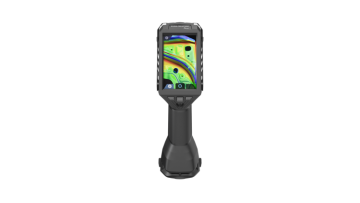
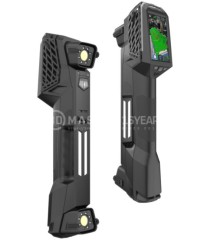
Vietnam’s UAV manufacturing industry is entering a period of rapid growth thanks to the technological mastery of domestic enterprises. To optimize the production process, advanced 3D technologies have become the key factor in shortening development cycles and improving accuracy. This article provides an in-depth analysis of four 3D solutions that effectively address the challenges of UAV design, testing, and manufacturing in Vietnam.
(2).jpg)
Comprehensive 3D scanning technology plays a decisive role at both ends of the UAV production process: input design and output inspection.
One of the most trusted devices among engineers today is the premium handheld scanner, the HandySCAN 3D EVO by Creaform.
Engineers scan existing fuselage components, propellers, or imported parts to collect digitized mesh data.
The scanner accurately recreates freeform curved surfaces, enabling improvements in aerodynamic design, helping UAVs optimize lift performance and adapt to Vietnam’s specific climatic conditions.
This technology also makes it possible to restore and rebuild complete CAD files for damaged UAV components or legacy parts that no longer have original design drawings.
The HandySCAN EVO offers metrology-grade accuracy of up to 0.020 mm. This ultra-low deviation ensures that UAV mechanical parts and joints fit together perfectly.
The device uses a multi-line blue laser grid system. As a result, it can capture data from reflective or dark surfaces (such as carbon fiber) without the need for spray powder.
Engineers can combine augmented reality (AR) technology with color mapping to inspect products. The system automatically compares physical components with the original CAD files, enabling rapid detection of wing or fuselage deformation directly on the production floor.
.jpg)
Raw data obtained from 3D scanners is typically stored as point clouds or mesh files.
To prepare these models for manufacturing, engineers use specialized software to convert them into smooth and editable CAD surfaces.
Geomagic Design X: This is one of the most powerful software solutions for converting mesh data into CAD models with design history. Engineers can easily modify dimensions, compensate for tolerances, and optimize UAV shell thickness.
VXmodel: This software module is included with Creaform systems. It optimizes scan data, repairs mesh holes, smooths surfaces, and transfers data directly into CAD software without losing coordinate references.
SolidWorks / Autodesk Inventor: These platforms are widely used to design UAV internal assemblies. Engineers use them to arrange battery compartments, camera mounts, landing gear systems, and perform collision detection before manufacturing.
Siemens NX / CATIA: These advanced solutions are designed for large-scale UAV projects or military UAV programs. The software supports advanced surfacing and synchronized product lifecycle management.
Physical testing is expensive and carries the risk of crashes or component damage. By adopting 3D simulation software, Vietnamese enterprises can perform trial-and-error processes entirely in a virtual environment, saving hundreds of millions of VND in R&D costs.
Engineers use software such as Ansys Fluent and Altair to simulate airflow and aerodynamic pressure around aircraft structures. These tools also evaluate the load-bearing capabilities of carbon-fiber frames under harsh weather conditions.
AI-powered generative design technology automatically calculates and removes unnecessary material. The result is a lightweight frame structure that still maintains optimal mechanical strength.
Software such as Mastercam and HyperMill converts reverse-engineered CAD data into precise machine instructions for multi-axis CNC systems. This process supports the machining of molds and structural components made from aerospace-grade aluminum alloys.
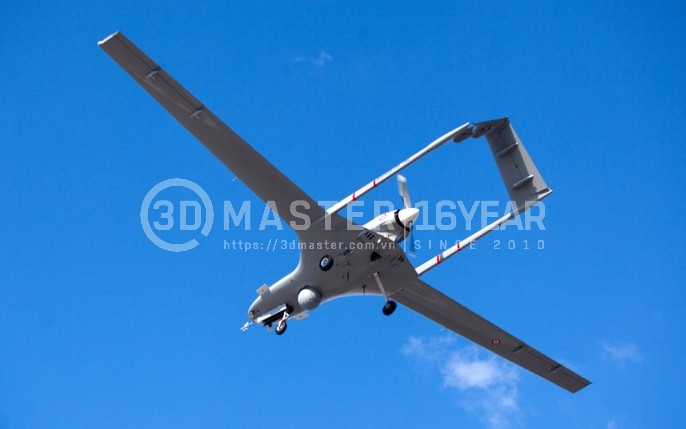
Additive manufacturing solves the challenge of producing complex UAV components. This technology reduces manufacturing time from several weeks to just a few hours.
Companies can quickly print parts such as protective casings, camera mounts, and landing gear for fit-check testing and ergonomic evaluation within the same day.
Modern industrial 3D printers support continuous carbon fiber, reinforced nylon, and metal powder sintering technologies using materials such as titanium. These components can be directly installed on UAVs as structural or heat-resistant parts.
3D printing enables the creation of hollow or lattice-based internal geometries that conventional CNC machining cannot produce. This capability minimizes UAV weight and significantly extends flight endurance.
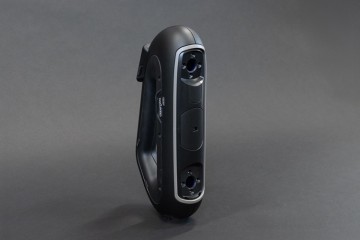
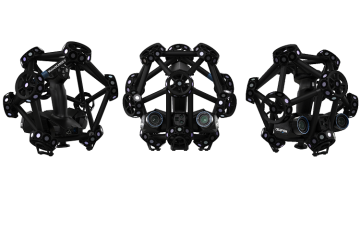
In addition to 3D scanners, inspection software plays a crucial role in Vietnam’s UAV manufacturing ecosystem.
These software solutions compare scanned data with CAD models, identify dimensional deviations, evaluate tolerances, and generate inspection reports automatically, improving product quality before assembly.
The implementation of a complete 3D technology ecosystem allows Vietnamese UAV manufacturers to optimize weight, improve precision, and reduce R&D time by up to 70%. This is a strategic step toward mastering advanced technologies and achieving breakthroughs in the market.
If your business is looking for 3D scanning and inspection solutions for UAV development, 3D Master is ready to provide consulting services and genuine 3D scanning systems such as the Creaform HandySCAN EVO, together with specialized technical support to optimize the entire UAV design and manufacturing workflow.
Contact Information – 3D Master
Hotline / Zalo / LINE / Telegram / WhatsApp / Viber / KakaoTalk: +84 982 089 198 | +84 986 333 960
Email: cuong3dmaster@gmail.com | hung3dmaster@gmail.com | tech3dmaster@gmail.com
Website: https://3dmaster.com.vn