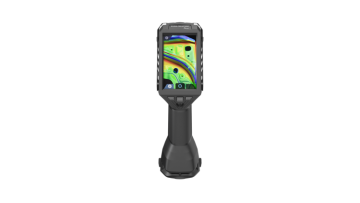
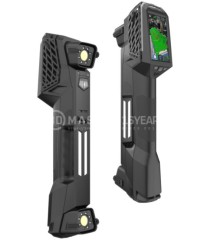
Defective products not only increase costs but can also silently disrupt entire production plans and damage a company’s reputation. The problem is that many factories only detect defects too late—after a large number of products have already been completed or even shipped.
In this context, an automated quality control solution is no longer just an upgrade option but a mandatory tool to ensure quality directly during the production process. However, to make this system truly effective, businesses must clearly understand how to implement it and the key factors to consider from the beginning.
An automated quality control solution (Automated Quality Control System – AQC) is an integrated system combining robots, measurement sensors, and analytical software to perform product inspection automatically instead of relying on manual human operations.
The core value of the system lies not only in “measurement” but also in real-time data processing and immediate feedback during production.
A typical system includes the following main components:
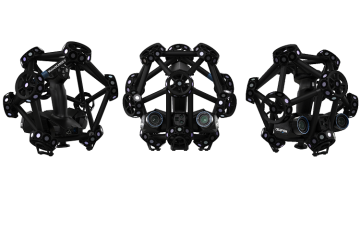
In practice, solutions such as MetraSCAN 3D-R—a robot-mounted 3D scanner for automated QC—or CUBE-R—a complete inspection cell—are typical examples of fully automated quality inspection workflows.
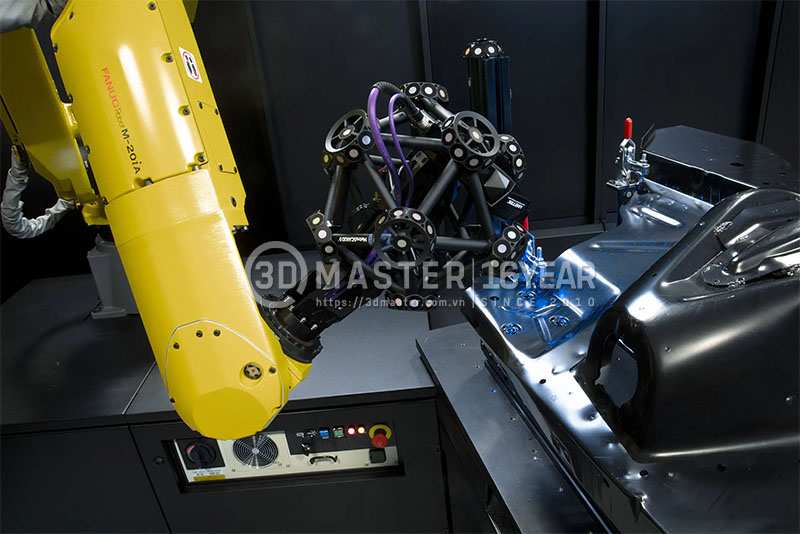
In modern manufacturing, automated QC solutions are not just inspection tools but foundational systems that help businesses control processes, optimize performance, and proactively reduce quality risks.
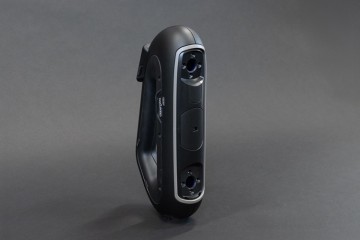
Before implementing any automated quality control solution, businesses must clearly define their inspection objectives. Not all processes need automation, and not all parameters require 100% inspection.
It is essential to determine: geometry, tolerance, deformation, or surface inspection? Full inspection or sampling? Inline or offline?
Proper goal definition helps avoid overinvestment or selecting inappropriate technologies, which can lead to inefficiency and high costs.
An effective automated quality control solution is not about choosing the most expensive equipment but the most suitable one. The system configuration should be designed based on product characteristics and production environment.
For example, large and complex parts are best suited for robot-mounted 3D scanners, while small, high-precision components may require contact measurement systems or specialized devices.
Additionally, choosing between industrial robots and cobots is important. Industrial robots are ideal for high-speed environments, while cobots offer flexibility for human interaction.
A common mistake is deploying automated quality control as a standalone system without integration into the production line.
In reality, maximum efficiency is achieved only when QC systems are tightly integrated with MES, PLC, or other production management systems. This allows measurement data to be used immediately for process adjustments instead of merely detecting defects.
Proper integration also ensures smooth production flow and avoids bottlenecks.
Automated quality control using robots and sensors
The accuracy of the entire automated quality control solution heavily depends on fixture design and part positioning.
If parts are not securely fixed or incorrectly positioned, measurement data will be inaccurate. This factor is often underestimated but directly impacts result reliability.
Fixtures should ensure stability, avoid part deformation, allow easy handling, and match production cycles.
An automated QC system must not only be accurate but also fast. If inspection time is too long, it can slow down the entire production line.
Therefore, it is essential to optimize robot paths, measurement points, and scanning strategies to balance accuracy and speed.
Simulation is often used to determine the optimal cycle time before real deployment.
Accuracy is the core of any AQC solution. However, it is not a fixed value and must be maintained through regular calibration.
Systems should be verified and calibrated according to international standards to ensure reliable data. Environmental factors such as temperature, vibration, and lighting must also be controlled.
Even with automation, human involvement remains critical in operating and utilizing automated quality control systems.
Personnel should be trained not only to operate equipment but also to interpret data, analyze results, and handle unexpected situations.
A good system operated incorrectly will not deliver expected results.
Finally, businesses should treat automated quality control solutions as long-term systems, not one-time investments.
Regular maintenance schedules are necessary to maintain system stability and performance. It is also important to choose scalable solutions that can adapt to changes in products or production scale.
Technical support from suppliers is especially crucial during the initial operation phase.
In summary, implementing an automated quality control system is not just about technology but a comprehensive strategy involving processes, people, and production planning. A well-designed system from the beginning helps businesses optimize operations, reduce costs, improve product quality, and enhance competitiveness sustainably.
On the other hand, poor implementation can lead to “partial automation”—high investment but low efficiency. Therefore, a structured approach and a clear understanding of core factors are key to maximizing system value.
If your business is looking for a practical and effective automated quality control solution, 3D MASTER is a trusted partner with over 10 years of experience distributing official Creaform solutions in Vietnam, offering full demo systems and a highly skilled technical team ready to support consultation, testing, deployment, and optimization.
CONTACT
Hotline - Zalo - LINE - Telegram - WhatsApp - Viber - KakaoTalk: +84 982 089 198 | 0986333960
Email: cuong3dmaster@gmail.com | hung3dmaster@gmail.com | tech3dmaster@gmail.com
Website: https://3dmaster.com.vn