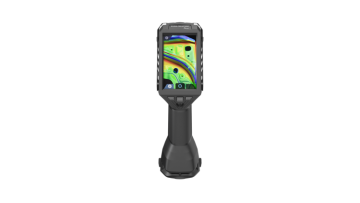
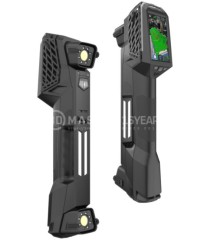
The Top 5 3D human scanners at 3D Master meet a wide range of needs, from fashion and statue casting to wood CNC and 3D printing. Depending on the application, you can choose a handheld 3D scanner, mini 3D scanner, or full-body scanning system. So, how much does a 3D scanner cost, and how can you choose an affordable 3D scanner effectively? The information below will provide detailed answers.
3D human scanning is the process of capturing the shape and surface characteristics of the human body to create 3D data. This data can then be processed into a 3D model for design, manufacturing, storage, or prototyping.
Some common applications include:
Full Body 3DF is a specialized full-body 3D scanning booth. The system is well suited for high-end tailoring and automated production.
The scanner captures the entire body in just 1/15 of a second. This speed eliminates motion blur caused by slight movements of the person being scanned. The system automatically outputs body measurements and reproduces realistic colors.
The scanning booth has a sturdy and mobile design and supports quick assembly and disassembly within 5 minutes. The system helps fashion stores create accurate custom-fit patterns without spending excessive time.
Key specifications:
For fashion studios or businesses that need to scan multiple people, 3DF is more suitable than using a handheld scanner to move around each body area.
.jpg)
For statue casting, scanner size is not the only important factor. The equipment needs to capture the shape, contours, and complex details of the model.
Faro Creaform HandySCAN Black™|Elite is a handheld blue-laser 3D scanner that is suitable for applications requiring movement around a statue and access to different areas.
The device accurately digitizes small details on the face or folds of clothing on a model and operates reliably even in casting workshops with high levels of vibration.
The scanner can directly capture difficult surfaces such as shiny metal or dark-colored materials without requiring scanning spray, helping bronze statue workshops significantly reduce model-making time.
Key specifications:
The scanned data can then be processed to create a 3D model. This provides a foundation for restoring models, modifying designs, or preparing data for subsequent manufacturing processes.
.png)
HandySCAN PRO™ is a blue-laser scanning system with an optimized cost for production workshops. Weighing just 0.92 kg, it allows flexible handheld operation over extended periods.
The device smoothly scans complex wood patterns and human body contours. The output data is clean and provides high resolution.
Engineers can reconstruct CAD models from real-world data. These models can then be used as a basis for modifications or prepared for CNC machining.
Key specifications:
If only manual measurement is used, reconstructing the original shape can take a significant amount of time. HandySCAN PRO is designed for applications that require real-world model digitization and integration of data into reverse-engineering workflows.
.jpg)
Faro Creaform Go!SCAN SPARK™ features multi-color white-light scanning technology. The scanner simultaneously captures both the 3D geometry and actual colors of an object. The device operates extremely quickly without requiring markers to be placed on the model.
Its high scanning speed allows smooth data acquisition when scanning people. The resulting 3D files retain vivid colors and can be used directly for color 3D printers or model creation.
Key specifications:
In summary, if you prioritize fast 3D data acquisition while retaining color information, Go!SCAN SPARK is a noteworthy option.
.jpg)
Not every business scans only one type of object. Some companies need to scan people as well as statues or large models. In such cases, a highly accurate handheld 3D scanner with a wide range of applications can provide greater flexibility than a specialized system.
HandySCAN EVO|Elite is a high-end handheld 3D scanner designed for demanding inspection and measurement applications. The device features a system of 46 blue laser lines and convenient wireless connectivity. It can easily scan large statues, monument structures, or full human bodies.
Data acquisition can reach up to 2,800,000 measurements per second. The scanner smoothly handles challenging surfaces such as human hair, dark clothing, and reflective details.
Key specifications of HandySCAN EVO:
HandySCAN EVO is suitable when a business needs a highly mobile device. Operators can move around the model to capture data from multiple angles.
.jpg)
Choosing a 3D scanner should not be based solely on the highest available accuracy. The device needs to match the size of the object, type of data, and actual production workflow.
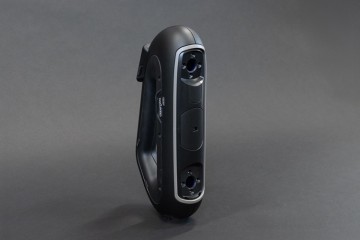
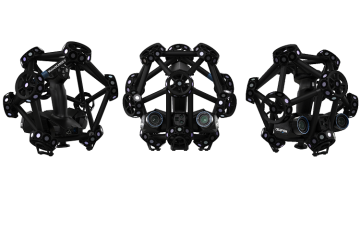
The price of a 3D scanner depends on its origin, scanning technology such as laser or white light, and the accuracy of the device.
| 3D scanner segment | Reference price range (VND) | Suitable industries |
|---|---|---|
| Affordable / Entry-level 3D scanner | 50,000,000 – 150,000,000 | Personal 3D printing, simple prototyping, training. |
| Mid-range / Professional 3D scanner | 200,000,000 – 500,000,000 | Fashion tailoring, wood CNC, medium-sized statue casting. |
| High-end / Metrology 3D scanner | Over 600,000,000 | Large-scale heritage digitization, industrial inspection, monument casting. |
Note: Exact prices vary depending on software configurations and included accessories. Customers should contact the distributor directly for a detailed quotation.
Investing in an affordable 3D scanner can help businesses reduce their initial investment costs. However, you need to make a careful selection so that the equipment remains within budget while still meeting actual work requirements.
If scanning is only required occasionally for individual projects, outsourcing the service may be more cost-effective than purchasing a scanner. When the workload increases and frequent scanning is required, it may be worth considering purchasing dedicated equipment.
3D Master provides a wide range of 3D scanning solutions, from full-body systems to handheld 3D scanners. The company also offers 3D scanning, 3D measurement, and reverse-engineering services. Customers can choose to purchase equipment or use scanning services depending on their frequency of use and investment budget.
In summary, choosing a suitable device from the Top 5 3D human scanners above can not only optimize production workflows but also significantly improve productivity and competitive advantages for businesses. Whether your needs involve fashion tailoring, sculpture and statue casting, or wood CNC applications, 3D Master is ready to provide suitable technology solutions. Contact us today for in-depth consultation and a hands-on machine demo.
3D Master Contact Information: