Should You Buy Reverse Engineering Software or Outsource When You Only Need to Recreate a Few Parts?
Should You Buy Reverse Engineering Software or Outsource When You Only Need to Recreate a Few Parts?
Posted Date: 29-11-2026
Should You Buy Reverse Engineering Software or Outsource When You Only Need to Recreate a Few Parts?
Recreating drawings for a few older components often leaves businesses weighing two options: buying reverse engineering software or hiring a service provider. Investing in a complete in-house setup can be costly and tie up resources if it sees little use. This article breaks down the costs, compares both options, and helps you choose the right approach for your needs.
1. What Is Reverse Engineering Software? Which Tools Are Available Today?
Reverse engineering software processes point clouds or triangular meshes captured by 3D scanners. It converts raw scan data into complete 3D CAD models for use in manufacturing.
Businesses can choose from several tools depending on their production scale and the complexity of the parts.
Here are some of the most widely used tools for reverse engineering and 3D data processing:
Geomagic Design X: A comprehensive reverse engineering tool for building parametric CAD models from scan data and transferring the feature history directly to SolidWorks, Creo, or NX.
VXmodel: A tool for converting 3D scan data into CAD-ready files. It helps users align scan data and quickly extract basic geometric surfaces.
Geomagic Control X: A professional 3D inspection solution for comparing scan data against original drawings and analyzing dimensional deviations.
PolyWorks: Advanced 3D data processing and inspection software suited to large scan datasets in heavy industry.
FARO CAM2: An integrated metrology platform that supports 3D scan data acquisition and automated inspection on production lines.
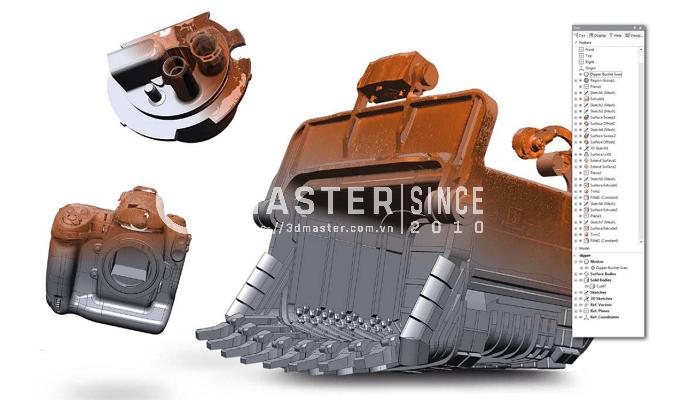
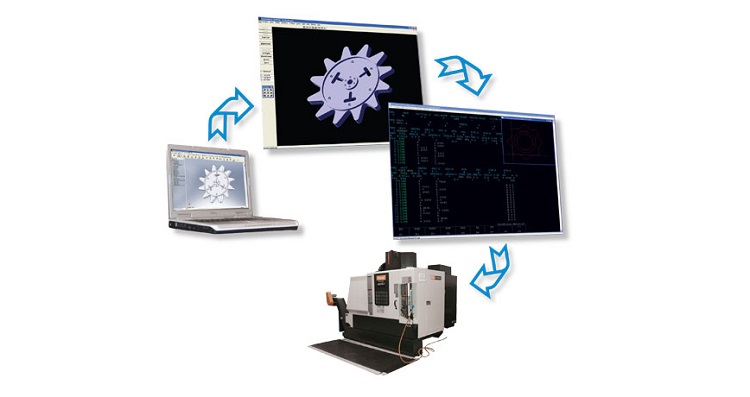
Building a parametric CAD model from 3D scan data
2. What Costs Should You Consider When Buying Reverse Engineering Software?
Many workshop owners focus on the software’s list price and overlook the operating costs that come with it. To run reverse engineering in-house, businesses need to budget for five categories:
Software licenses: Specialized software licenses can be expensive. Additional CAD software may also be needed to complete 2D drawings.
Annual maintenance and updates: Software maintenance renewals cover bug fixes and feature upgrades from the vendor.
Hardware and 3D scanning equipment: Businesses need to budget for an industrial 3D scanner and a high-performance workstation capable of handling large datasets.
Specialized staff training: Engineers need time and training to learn surface modeling, mesh processing, and tolerance control.
Additional inspection software: Businesses may need separate inspection tools to measure deviations between the CAD model and the physical sample.
The total cost of bringing reverse engineering in-house includes software licenses, hardware, staff training, and supporting tools. The investment generally makes financial sense when the business has an ongoing need for reverse engineering.
3. Advantages and Disadvantages of Outsourcing Reverse Engineering
For businesses that need to recreate only a few machine parts each year, outsourcing turns a fixed investment into a variable cost paid per project.
Advantages:
Lower costs: Businesses pay based on the number and complexity of the parts. They avoid equipment depreciation and software licensing costs.
High technical accuracy: Service providers use metrology-grade 3D scanners and have engineers who work with scan data daily. This helps them deliver accurate CAD files.
Faster turnaround: Businesses can skip equipment procurement and staff training. They send the physical sample and can receive a completed CAD file within a few business days.
Disadvantages:
Dependence on the provider’s schedule: If a part requires several rounds of design revisions, the business has to work around the service provider’s availability.
Confidentiality requirements: Sending samples outside the factory can expose proprietary technology unless both parties sign a robust nondisclosure agreement (NDA).
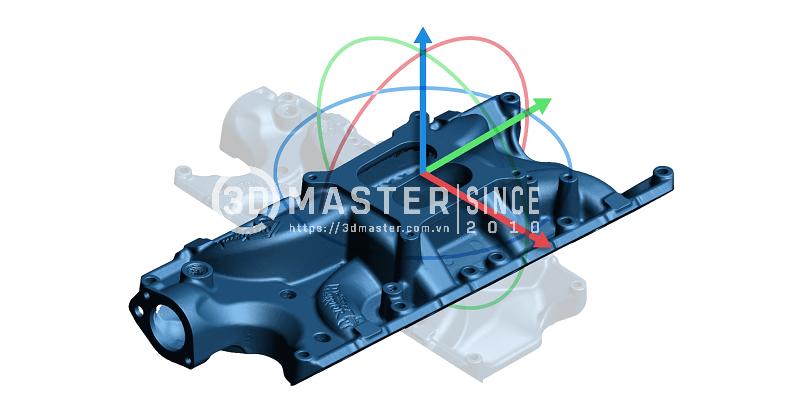
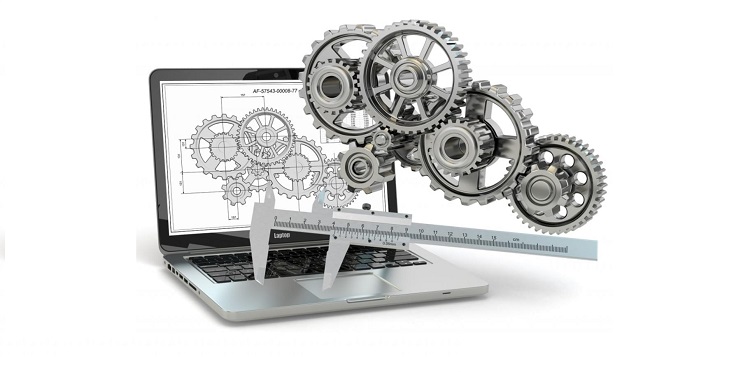
Building a CAD model from a sample component
4. If You Only Need to Recreate a Few Parts, Should You Buy Software or Outsource?
If your business only needs to recreate 1 to 10 parts and has no plans to scan samples regularly, outsourcing reverse engineering is the more cost-effective option.
The table below compares both approaches for small projects:
Criterion
Buy Reverse Engineering Software
Outsource Reverse Engineering
Upfront investment
Very high (software, 3D scanner, and workstation)
Low (pay per component)
Turnaround time
Longer (equipment procurement and engineer training take time)
Faster (CAD files delivered in 1–5 business days)
Drawing accuracy
Depends on the skills of the in-house team
High, with accuracy checked using metrology-grade equipment
Control over revisions
Full control, with the ability to revise designs at any time
Depends on the provider’s schedule and response times
Cost-effectiveness for a small number of parts
Potential loss or a payback period of several years
Most cost-effective, with no fixed investment
5. Four Exceptions Where Buying Reverse Engineering Software Makes Sense Now
Although outsourcing saves money when only a few parts are involved, businesses should consider investing in in-house reverse engineering software right away in any of the following four situations:
Strict confidentiality requirements: Defense components, proprietary medical devices, or samples from core R&D projects must remain on factory premises.
Frequent testing and design iterations: Products need to go through multiple rounds of 3D scanning, CAD revisions, prototype machining, and inspection in quick succession.
A broader factory digitization plan: The first few parts are a pilot project for digitizing the entire inventory of molds, dies, and spare parts.
Existing hardware and CAD expertise: The workshop already has a 3D scanner and experienced CAD engineers. Mesh processing software is the final tool needed to complete the workflow.
6. 3D Master – Reliable, High-Quality End-to-End Reverse Engineering Services
If you urgently need to recreate drawings for a few components and want to avoid investing hundreds of millions of Vietnamese dong in an in-house setup, 3D Master can handle the entire project.
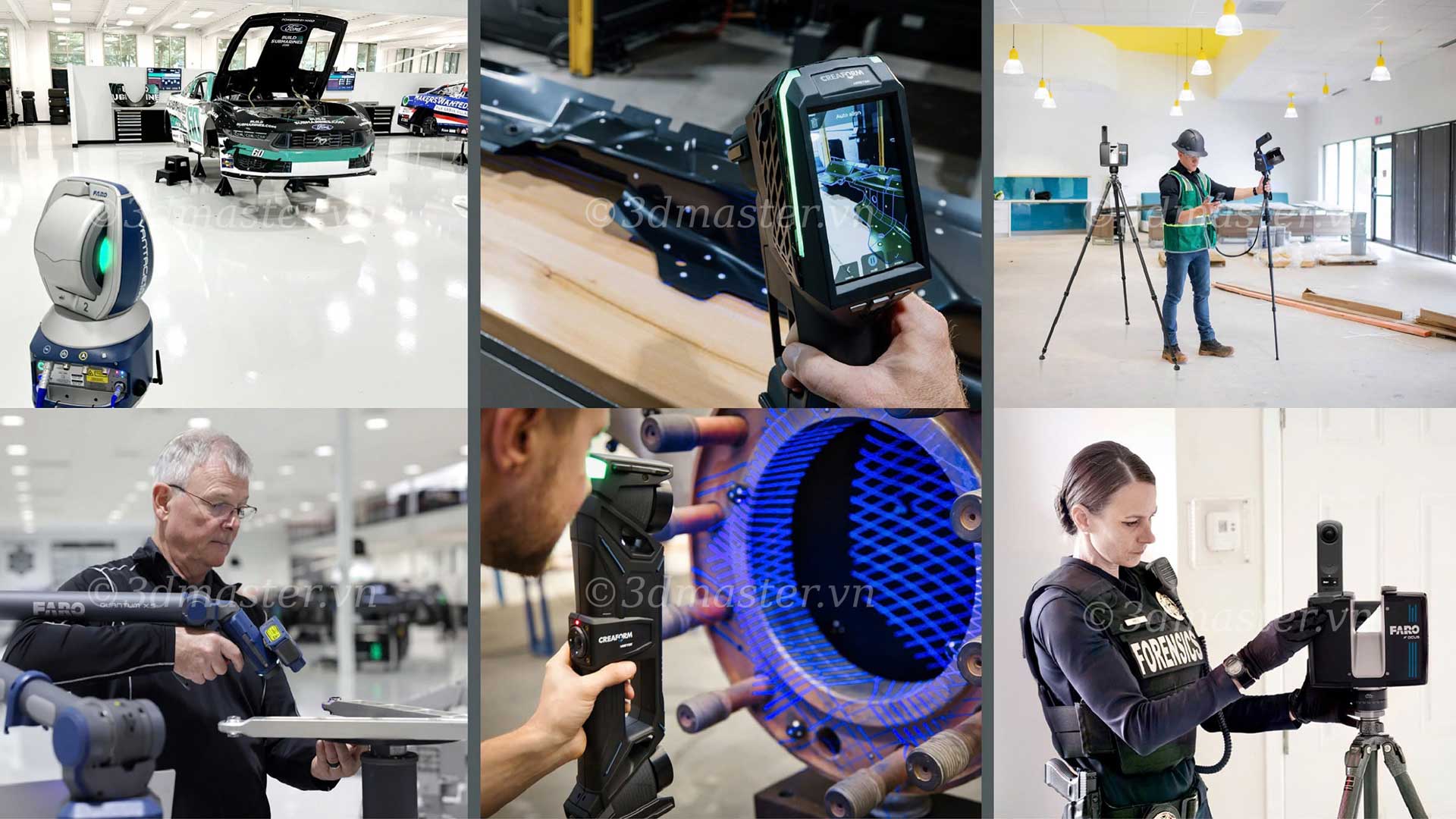
Industrial metrology equipment: 3D Master uses high-accuracy 3D scanners from FARO and Creaform, along with licensed software such as Geomagic Design X and Geomagic Control X. The team captures fine details and provides a report showing the measured deviations.
Complete parametric CAD files: Customers receive CAD files in formats such as STEP, IGES, or SolidWorks. Native parametric files include the design history tree for easy dimensional edits. Exported models can be used to prepare CNC machining or 3D printing jobs.
Confidentiality and fast turnaround: 3D Master follows ISO 9001:2015 and ISO 17025:2017 standards in its workflows, can sign nondisclosure agreements (NDAs), and offers on-site scanning at workshops across Vietnam.
Choosing between buying software and outsourcing reverse engineering can save businesses hundreds of millions of Vietnamese dong in upfront investment while keeping production on schedule. When only a few parts need to be recreated, outsourcing to a professional service provider helps businesses preserve cash flow and manage project risks.