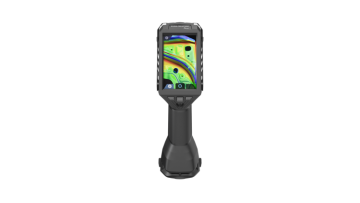
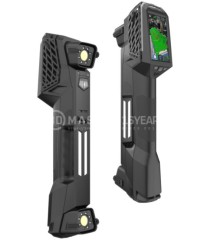
3D scanning technology for unmanned aerial vehicles enables rapid acquisition of highly accurate geometric data for reverse engineering, quality inspection, and new product development. Instead of relying on time-consuming manual measurements, modern 3D scanning systems can capture millions of data points within minutes, generating CAD models, analyzing dimensional deviations, and supporting more precise component manufacturing.
For aerospace engineers and UAV specialists, highly accurate 3D scan data is the key to solving complex challenges related to aerodynamics, material structures, and digital simulation.
Rather than relying on manual measurements, converting UAVs into Digital Twins has become essential for optimizing performance and minimizing operational risks throughout the product lifecycle.
This transition from physical models to digital data delivers five core advantages that effectively address critical engineering challenges:
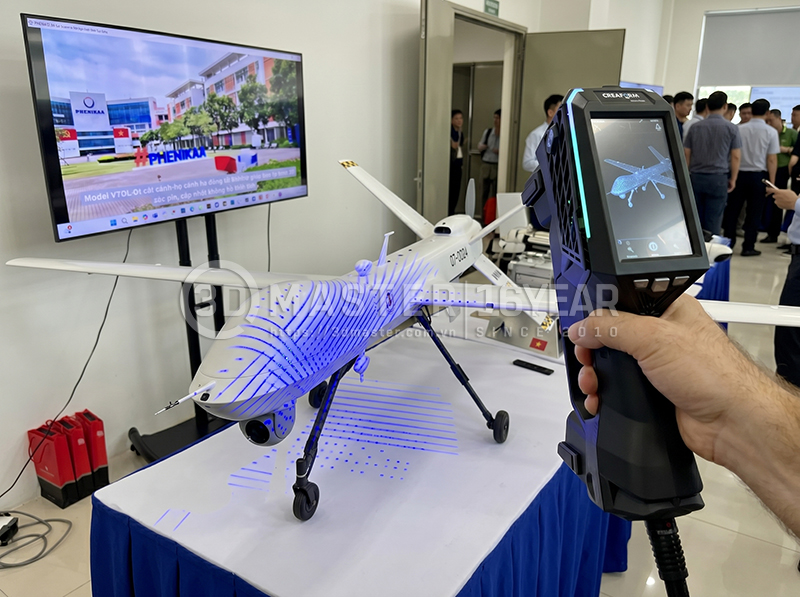
To achieve the highest possible accuracy at the micron level, proper preparation is essential before scanning a UAV.
Because UAVs are composed of complex materials such as glossy carbon fiber, moving propellers, and sensitive electronic components, pre-scan preparation is necessary to avoid data noise and ensure optimal scanning performance.
A UAV 3D scanning process is only truly optimized when accurate scanning procedures are combined with a high-performance professional scanning system.
To address these requirements, the Creaform HandySCAN EVO handheld laser scanner is a leading solution thanks to its metrology-grade accuracy, markerless scanning capability, excellent performance on glossy carbon surfaces, and unmatched mobility around complex UAV structures.
A typical UAV scanning workflow using this advanced technology consists of the following five steps:
Step 1: Connect the HandySCAN EVO to a computer running VXelements software and perform on-site calibration to ensure maximum laser measurement accuracy.
Step 2: Move the scanner around the UAV while maintaining the recommended scanning distance. The blue laser mesh captures detailed point-cloud data from the fuselage, camera cavities, wing edges, and other critical areas.
Step 3: Monitor the real-time model displayed on the screen. Immediately identify missing data regions or insufficient point density and perform additional scans as needed.
Step 4: Use the software to remove noise, clean environmental artifacts, and convert the point cloud into a complete polygon mesh model in STL or OBJ format.
Step 5: Export high-quality 3D data to specialized engineering software for reverse engineering, CAD reconstruction, or aerodynamic simulation.
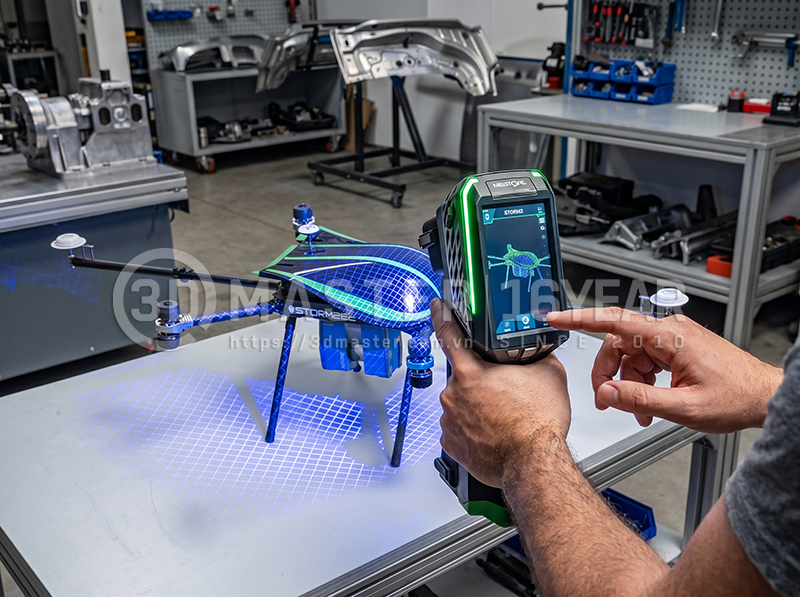
When using advanced wireless scanning systems such as the Creaform HandySCAN Black EVO, engineers can save significant time thanks to markerless scanning and the ability to directly capture reflective surfaces.
However, achieving metrology-grade accuracy at the micron level still requires careful control of environmental and material-related factors.
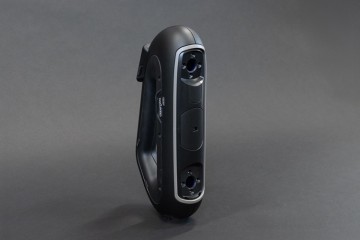
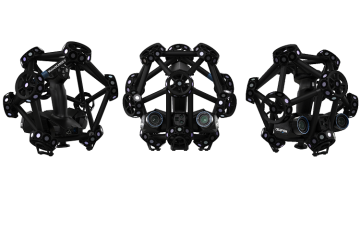
To maximize the performance of high-speed handheld systems such as the Creaform HandySCAN EVO, combining effective scanning techniques with intelligent data processing strategies is essential.
By properly managing computing resources and utilizing advanced software features, users can significantly increase productivity while maintaining micron-level accuracy.
3D scanning technology for unmanned aerial vehicles continues to play an increasingly important role in UAV design, inspection, maintenance, and optimization.
The implementation of modern 3D scanning solutions enables organizations to acquire highly accurate geometric data, shorten development cycles, and improve manufacturing efficiency.
To maximize the benefits of this technology, selecting the right equipment and an experienced technology partner is crucial.
With extensive experience delivering professional 3D digitization and metrology solutions, 3D MASTER and the Creaform HandySCAN EVO are ready to support organizations in UAV 3D scanning, reverse engineering, and quality inspection projects.
Contact Information
3D MASTER
Hotline / Zalo / LINE / Telegram / WhatsApp / Viber / KakaoTalk:
+84 982 089 198 | +84 986 333 960
Email:
cuong3dmaster@gmail.com
hung3dmaster@gmail.com
tech3dmaster@gmail.com
Website:
https://3dmaster.com.vn