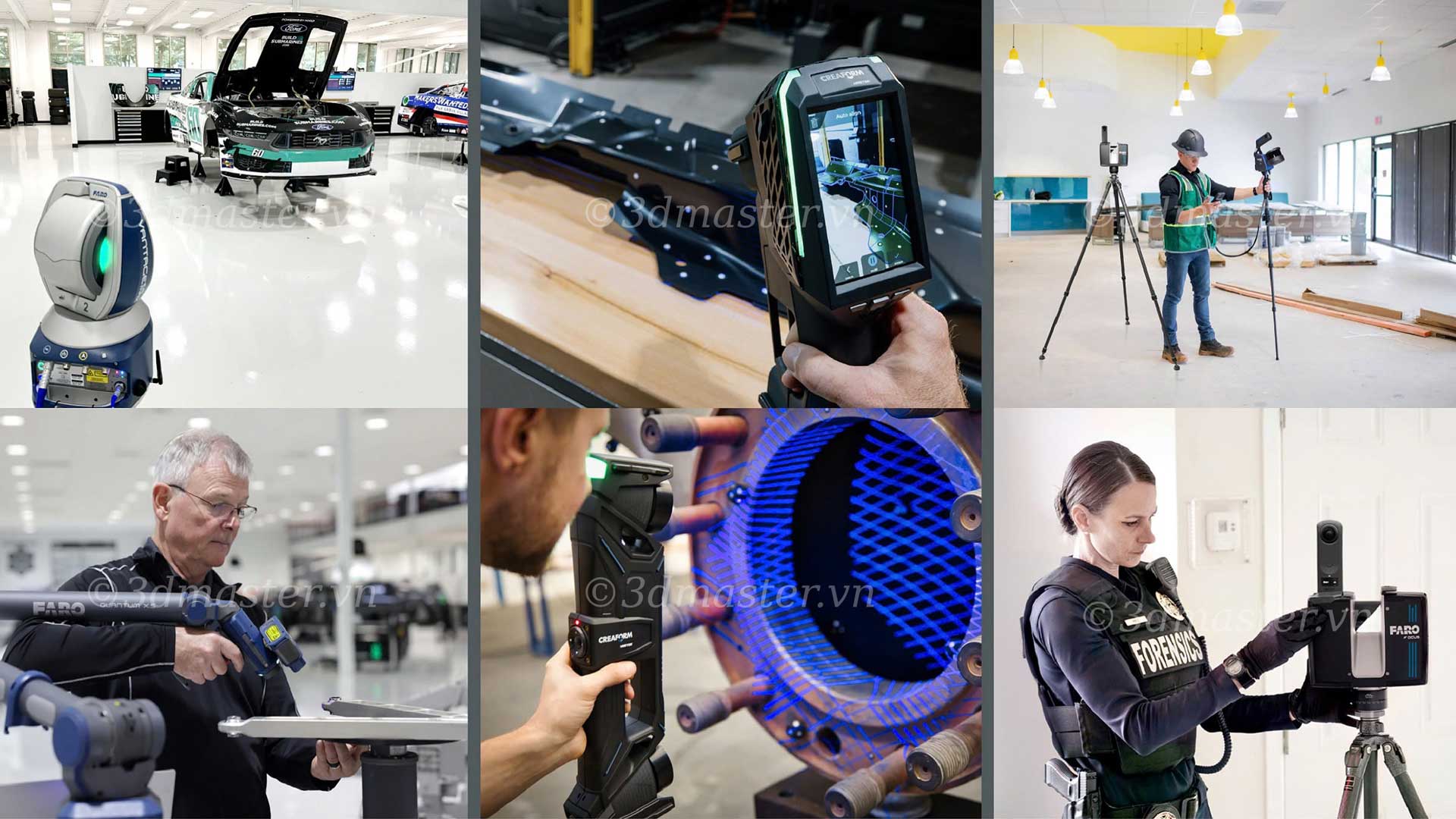
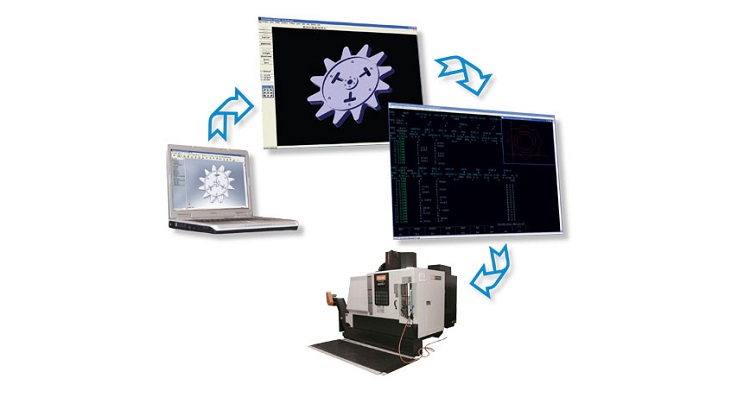
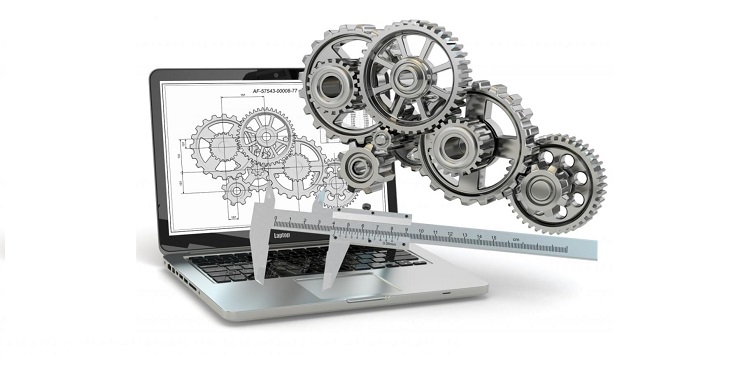
The UAV manufacturing industry is rapidly expanding across defense, land surveying, agriculture, logistics, and search-and-rescue applications. However, to ensure stable operation, safety, and optimal flight performance, every component—from the airframe and wings to motor mounts and assembled structures—must be strictly controlled for dimensional accuracy and geometric integrity.
In practice, many manufacturing defects cannot be detected with the naked eye but can significantly impact UAV flight performance.
This is why 3D scanning technology has become an essential tool for geometric inspection and quality control in modern UAV manufacturing.
%20(1).jpg)
Unlike conventional mechanical products, UAVs are highly integrated systems combining aerodynamics, structural mechanics, and electronic flight control.
As a result, even slight geometric deviations may lead to major operational issues.
For example:
These deviations often remain unnoticed during assembly but become evident during flight through vibration, reduced stability, and increased power consumption.
When defects exist on individual components, corrective actions are relatively straightforward.
However, once defects are discovered after complete assembly or flight testing, repair costs increase dramatically.
Additional expenses may include:
For time-sensitive UAV development programs, late defect detection can substantially increase project costs.
Modern UAVs are increasingly deployed in mission-critical applications, including:
Manufacturers are no longer expected merely to produce functional aircraft—they must also guarantee production repeatability and consistent quality across mass production.
This requires advanced inspection solutions capable of evaluating the complete geometry rather than measuring only isolated points.
(1).jpg)
Throughout machining, mold fabrication, composite curing, and final assembly, manufacturers commonly encounter several critical defects.
Airframe Dimensional Deviations
Material shrinkage during CNC machining or molding may alter geometric dimensions, causing cable interference and shifting the aircraft's center of gravity (CG).
Wing Warpage and Deformation
Uneven temperature control during composite curing generates internal stresses that twist or warp the wing, altering the angle of attack and reducing aerodynamic lift balance.
Motor Mount Misalignment
Improperly machined motor mounting surfaces cause uneven thrust distribution, forcing the flight controller to compensate continuously, which may overheat the motors and damage ESCs.
Left-Right Structural Asymmetry
Differences in wing length, thickness, or profile between the left and right sides create lift imbalance, reducing flight stability and shortening actuator lifespan.
Composite Assembly Errors
Improper adhesive bonding or riveting creates excessive gaps or flush deviations between composite panels, increasing aerodynamic drag during high-speed flight.
Mold Wear and Manufacturing Errors
Composite molds gradually wear or deform due to repeated thermal cycles, introducing systematic dimensional errors across entire production batches.
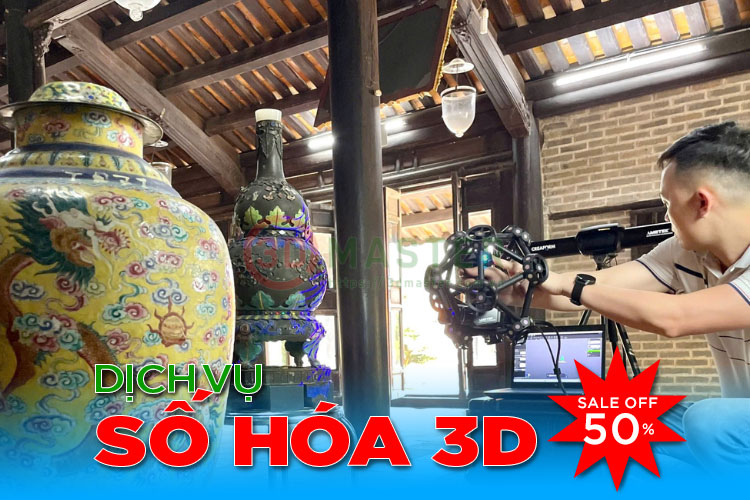
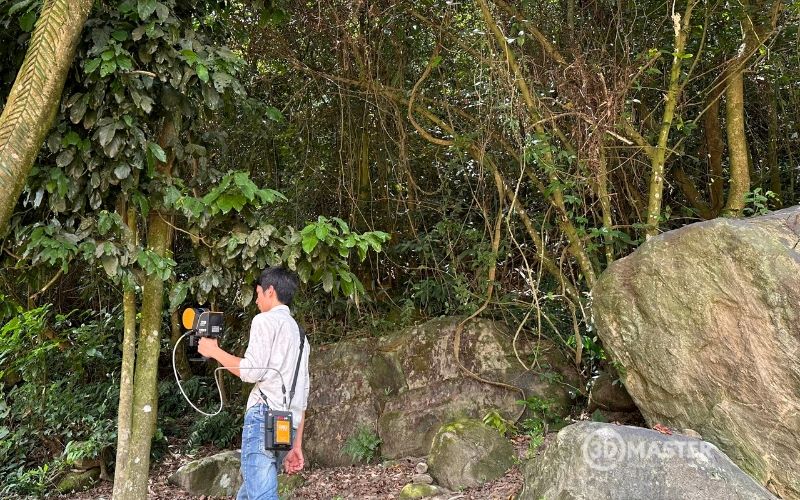
High-accuracy handheld blue laser scanners such as the Creaform HandySCAN EVO digitize the complete UAV geometry and analyze dimensional deviations through specialized inspection software.
Unlike calipers or traditional CMMs that collect individual measurement points, 3D scanning captures millions of points across the complete surface.
Benefits include:
For carbon fiber and composite components, 3D scanning significantly reduces inspection time compared to traditional methods.
Since it is completely non-contact, it accurately captures aerodynamic curves and complex body profiles without deforming thin plastic or composite structures.
After generating the mesh model, inspection software aligns it with the original CAD design.
This quickly determines whether the manufactured part conforms to engineering specifications.
Results are displayed as an intuitive color deviation map:
Quality engineers can instantly identify both the location and magnitude of deviations with micron-level precision.
Instead of measuring only selected points, the entire surface can be evaluated in a single inspection.
Not every deviation affects UAV performance.
However, exceeding specified tolerances may lead to assembly problems, instability, and reduced flight efficiency.
3D scanning quickly evaluates:
All measured data are compared against engineering tolerances to determine pass/fail status during production, minimizing the risk of discovering defects only after flight testing.
Structural symmetry is essential for stable UAV flight.
Even slight differences between the left and right wings may alter lift distribution and reduce flight performance.
Using 3D scan data, engineers can:
These defects are often impossible to identify visually or with conventional measuring tools.
Symmetry analysis enables early detection of structural issues before prototype validation or mass production.
.jpg)
To maximize manufacturing efficiency and product quality, 3D scanning should be integrated throughout the entire UAV production lifecycle.
| Stage | Application | Role of 3D Scanning |
|---|---|---|
| 1. Research & Development (R&D) | Reverse engineering existing components such as batteries and cameras; collecting geometry for CFD simulations | Accelerates product development |
| 2. Prototype Manufacturing | Inspect first CNC or 3D-printed prototypes | Correct geometric errors before mold production |
| 3. Mass Production | Mold calibration, First Article Inspection (FAI), robotic quality inspection | Ensures production consistency |
| 4. Maintenance & Product Improvement | Detect impact damage, deformation, and hidden defects | Provides accurate data for structural upgrades |
As UAV manufacturing demands increasingly higher precision and reliability, 3D scanning technology has become an indispensable solution for detecting dimensional deviations, optimizing manufacturing workflows, and improving overall product quality.
With over 10 years as the official distributor of Creaform 3D scanning solutions in Vietnam, 3D MASTER provides complete demo systems and experienced application engineers to help UAV manufacturers implement the most suitable inspection solutions.
Hotline / Zalo / LINE / Telegram / WhatsApp / Viber / KakaoTalk
+84 982 089 198 | +84 986 333 960
Website