0986 333 960
Request Quote

5 Signs Your Business Should Invest in a 3D Scanner Now

5 Signs Your Business Should Invest in a 3D Scanner Now

As manufacturing continues to demand higher levels of precision, 3D scanners are no longer tools reserved exclusively for large corporations. Many small and medium-sized enterprises (SMEs) are now investing in this technology to support reverse engineering, quality inspection, and product development. However, not every business knows the right time to make this investment.

If your company is experiencing any of the following signs, it may be time to consider purchasing a 3D scanner instead of relying on traditional measurement methods.

1. 3D Scanners Are No Longer Reserved for Large Enterprises

In the past, the high investment cost discouraged many businesses from adopting 3D scanning technology. Today, as the technology has matured, 3D scanners have become significantly more accessible. Many SMEs have already integrated them into their production processes to improve productivity and product quality.
  • More affordable investment costs: Today, a wide range of scanner models is available to suit different business sizes, budgets, and application requirements.
  • User-friendly technology: Modern software features intuitive interfaces and fast scanning workflows. Technicians can become proficient after a short training period.
  • Metrology-grade accuracy: Many industrial 3D scanners meet internationally recognized metrology standards, making them suitable for quality inspection applications.
  • Applicable across multiple industries: Precision machining, mold manufacturing, automotive, aerospace, shipbuilding, energy, plastics, casting, healthcare, education, and cultural heritage preservation.
  • Easy integration into digital workflows: Scanned data can be used for reverse engineering, 3D inspection, Digital Twin development, and digital product archiving.
  • Excellent long-term return on investment: Businesses with frequent scanning needs can significantly reduce outsourcing costs while gaining complete control over their projects.
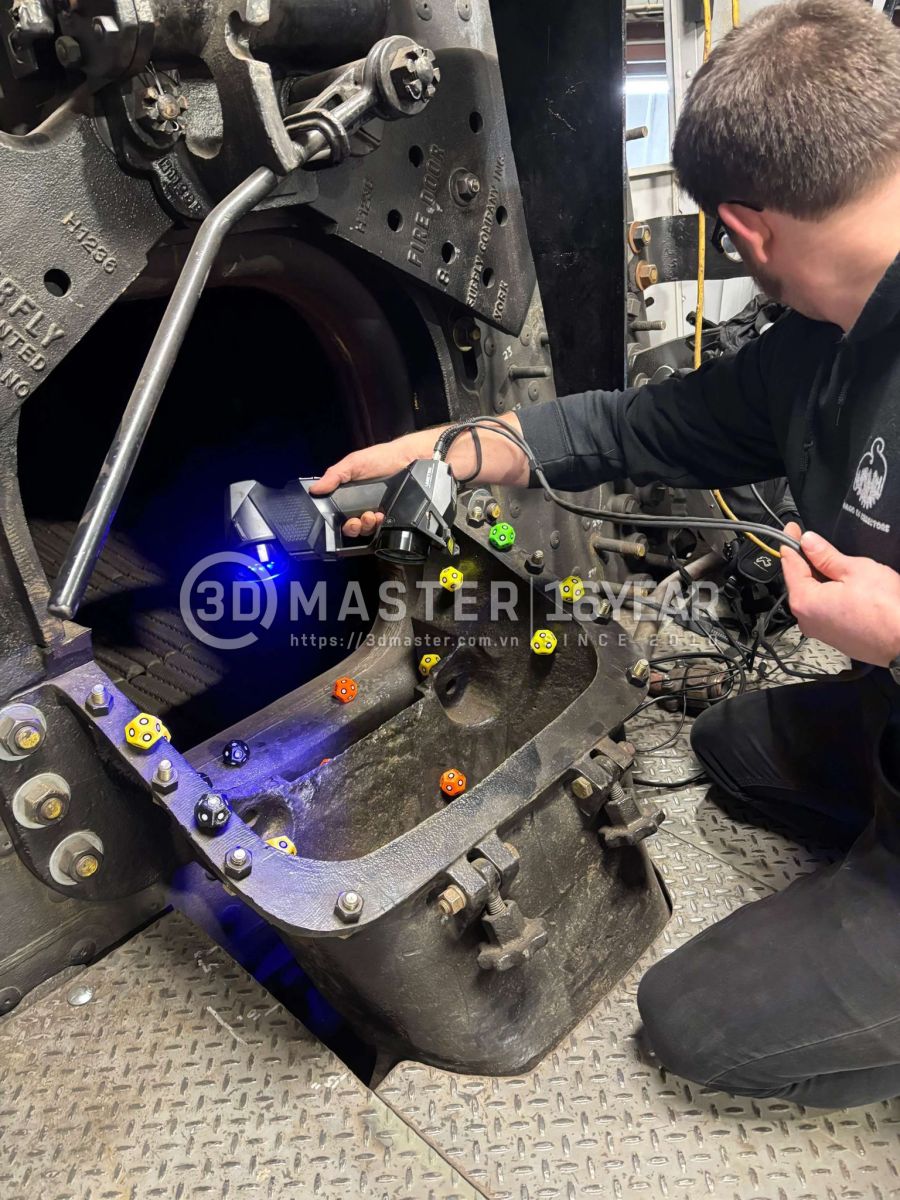
3D scanners for product quality inspection

2. Signs That Your Business Should Consider Buying a 3D Scanner Immediately

2.1 Your Business Frequently Performs Manual Measurements or Outsources 3D Scanning Services

If your company regularly requires 3D scanning, continuing to outsource the work can increase costs while reducing operational flexibility.

  • Manual measurement is time-consuming, especially for curved or geometrically complex surfaces.
  • Outsourced 3D scanning services require scheduling every project and waiting for service availability.
  • Accumulated outsourcing costs often exceed the cost of purchasing a scanner when scanning is performed frequently.
  • Relying on external providers can delay engineering, design, or manufacturing schedules.
  • New products or proprietary components must be shared with third-party service providers.

If your business requires 3D scanning weekly or monthly, investing in a 3D scanner typically delivers a much better long-term return on investment.

2.2 You Frequently Need to Reconstruct CAD Models or No Longer Have CAD Data

Many manufacturers need to reproduce legacy components or improve existing products but no longer have access to the original CAD files.

  • Missing design files: Only the physical component remains while the original CAD model has been lost.
  • Legacy or imported parts: The original manufacturer no longer provides engineering documentation.
  • Aged molds or worn components: Existing parts need to be reconstructed for repair or remanufacturing.
  • Manual measurement lacks precision: It is time-consuming and prone to dimensional inaccuracies.
  • Faster reverse engineering: Scanned data provides the foundation for generating accurate 3D models and rebuilding CAD geometry.

With a 3D scanner, businesses can quickly capture highly accurate geometric data and establish a reliable foundation for reverse engineering. This significantly shortens CAD reconstruction time, minimizes measurement errors, and accelerates product development.

2.3 Measurement Errors Are Affecting Product Quality

Measurement accuracy is a critical factor in the quality of precision-machined parts, molds, and industrial components.

If your inspection process cannot provide sufficient accuracy, your business may face defective products, assembly issues, or repeated rework.

In these situations, conventional measurement methods may no longer be adequate:

  • Unable to inspect the entire surface: Only discrete measurement points can be collected.
  • Small deformations are difficult to detect: Deviations on freeform or curved surfaces can easily be overlooked.
  • Time-consuming inspection process: Especially when measuring components with complex geometries.
  • Assembly defects occur: Accumulated dimensional errors reduce the overall quality of the final product.

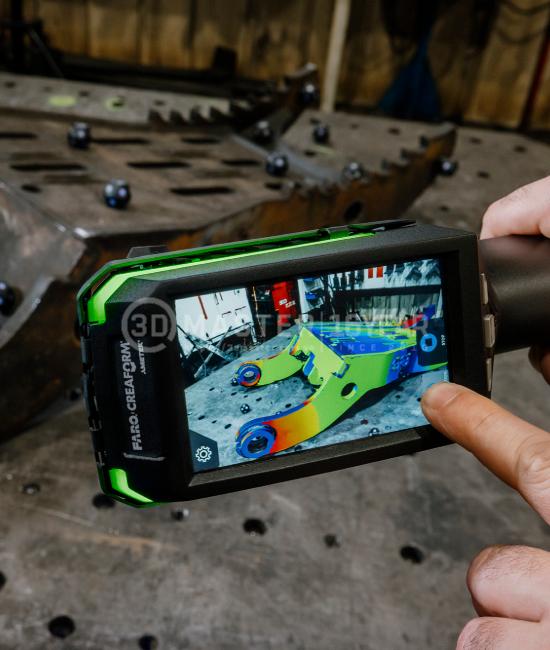
A 3D scanner enables comparison between the scanned part and its CAD model using a Color Deviation Map, allowing engineers to quickly identify areas that exceed tolerance limits.

High-accuracy 3D scanning of precision mechanical components

2.4 Product Development Takes Too Long

Reducing product development time is a major objective for today's manufacturers. However, when design data is collected using conventional methods, creating and modifying 3D models becomes significantly more time-consuming.

  • Multiple design revisions, with every modification requiring additional engineering time.
  • Difficulty digitizing physical samples, particularly those with freeform geometries.
  • Slow prototyping processes, resulting in extended testing and product optimization cycles.

Investing in a 3D scanner enables businesses to digitize products rapidly, streamline reverse engineering, and significantly shorten the R&D cycle. This provides a valuable competitive advantage by bringing new products to market faster.

2.5 Your Business Is Expanding Production or Pursuing Digital Transformation

As manufacturing operations expand, the demand for digital data and consistent quality control becomes increasingly important.

  • Growing production volumes require faster inspection and data processing.
  • Expanding manufacturing lines require standardized inspection procedures across multiple processes.
  • Participation in global supply chains requires traceable inspection reports and measurement data.
  • Smart factory initiatives require digital data for Digital Twin implementation and intelligent manufacturing.
  • Building a centralized 3D data library enables easier storage, retrieval, and reuse of engineering data.

This is an ideal time to invest in a 3D scanner and establish a solid foundation for modern, data-driven manufacturing.

3. Should You Invest in a 3D Scanner or Continue Outsourcing 3D Scanning Services?

If your business only requires 3D scanning a few times per year, outsourcing remains a practical solution. However, when scanning becomes a routine part of your workflow, investing in a 3D scanner offers significantly greater long-term value.

Criteria Outsourcing 3D Scanning Services Investing in a 3D Scanner
Long-term cost Increases with every scanning project Primarily involves the initial investment and periodic maintenance
Scheduling flexibility Depends on the service provider's availability Scan whenever needed
Project timeline Potential delays due to external scheduling Full control over project progress
Data security Engineering data must be shared with third parties All data remains securely stored in-house
Reverse engineering Depends on the service provider Perform reverse engineering whenever required
Quality inspection Performed only when outsourcing Conduct inspections directly on the production floor
Technical capability Does not build internal expertise Develop a skilled in-house engineering team
Return on investment Suitable for occasional scanning needs Delivers excellent ROI for businesses with frequent scanning requirements
Product deviation inspection using 3D scanning technology
Product deviation inspection using 3D scanning technology​​​

4. How to Choose the Right 3D Scanner for Your Business

Today, the market offers a wide range of 3D scanners with varying prices, accuracy levels, and features. However, the most expensive system is not always the best choice.

To maximize your investment, businesses should carefully evaluate their application requirements, the types of parts they need to scan, and their actual production workflow.

  • Define your application requirements: Determine whether the 3D scanner will be used for quality inspection, reverse engineering, product development, or digital archiving.
  • Choose based on part size: Small components require high-resolution scanners, while large molds or vehicle bodies benefit from scanners with a wider scanning area to improve productivity.
  • Consider the required accuracy: Select a scanner that meets your product's dimensional tolerance requirements. Precision machining and mold manufacturing typically require metrology-grade accuracy.
  • Evaluate scanning speed: High-speed scanners significantly reduce data acquisition time, especially when scanning multiple parts continuously.
  • Assess the accompanying software: Choose software that enables efficient data processing, supports multiple export formats, and integrates seamlessly with CAD and inspection software.
  • Evaluate surface scanning capability: If you frequently scan dark, shiny, or reflective objects, prioritize scanners designed to handle challenging surface conditions.
  • Consider after-sales support: Comprehensive training, warranty services, and technical support help maximize equipment performance and long-term reliability.
  • Choose a trusted supplier: An experienced solution provider can recommend the most suitable system and provide professional support throughout the equipment's lifecycle.

3D Master has many years of experience in industrial 3D measurement and digitalization and has been an authorized distributor of FARO Creaform industrial 3D scanning solutions in Vietnam for more than 10 years.

The company provides professional consulting, on-site equipment demonstrations using customers' actual parts, operator training, solution implementation, and on-site technical support whenever required. This enables businesses to select the most appropriate solution and maximize the value of their investment throughout the equipment's service life.

In summary, investing in a 3D scanner is more than simply improving measurement accuracy. It enables manufacturers to optimize quality inspection, streamline reverse engineering, accelerate product development, and support digital transformation initiatives.

If your business frequently outsources 3D scanning services, spends excessive time reconstructing CAD models, struggles with quality control, or is expanding its manufacturing capacity, now is the right time to consider investing in a 3D scanner.

>>> Get Expert Advice – Genuine, High-Precision 3D Scanners

Contact 3D Master:

Hotline / Zalo / LINE / Telegram / WhatsApp / Viber / KakaoTalk:
+84 982 089 198 | +84 986 333 960

Email:
cuong3dmaster@gmail.com
hung3dmaster@gmail.com
tech3dmaster@gmail.com

Website:
https://3dmaster.com.vn

Article Reviews
Choose your rating

Other News

Call now
Zalo