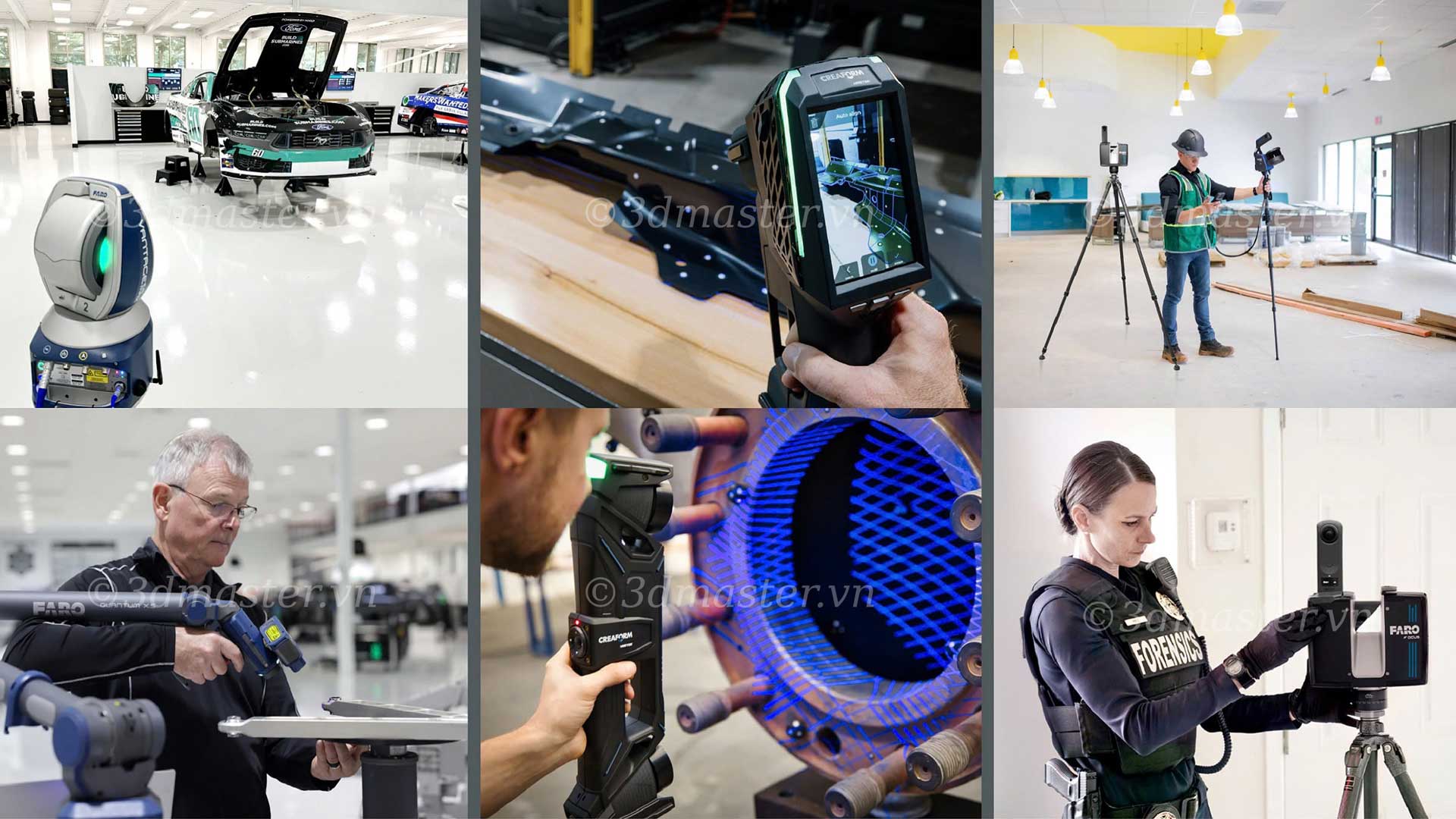
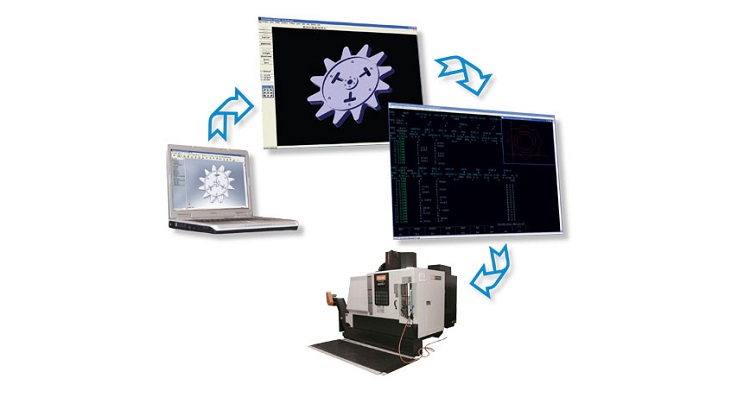
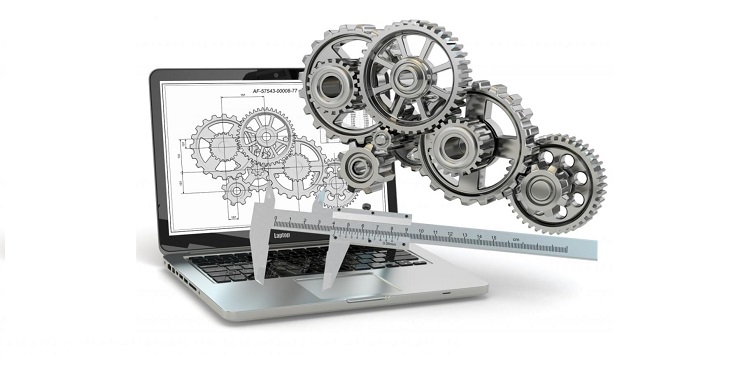
On May 18, 2026, the Vietnam National Museum of Nature solemnly celebrated its 20th anniversary, marking an important milestone in building and developing a massive scientific archive containing thousands of rare specimens and an enormous scientific database.
In the orientation toward accelerating digital transformation and building big data systems for the museum sector, the 4th National Scientific Conference became a bridge connecting conservation science with modern technology.
At the event, 3D MASTER introduced its presentation on the application of 3D digitization and 3D printing technology for museum artifacts, opening up innovative solutions for artifact preservation, restoration, and value enhancement in the era of digital museums.
.jpg)
After 20 years of development, the Vietnam National Museum of Nature is currently preserving more than 100,000 specimens along with a digital data system exceeding 2 Terabytes in capacity.
The collection includes many rare specimens, scientific reference samples, and artifacts with exceptional research value.
Alongside preservation activities, the museum also faces numerous challenges in maintaining artifacts over time. Some specimens possess fragile structures, are difficult to transport, or are heavily affected by environmental conditions such as humidity, temperature, and light exposure.
This is precisely why 3D digitization technology has become an inevitable trend in the modern museum industry.
Instead of relying solely on traditional images or paper records, 3D data enables the complete recreation of an artifact’s shape, dimensions, texture, and color as highly accurate digital data.
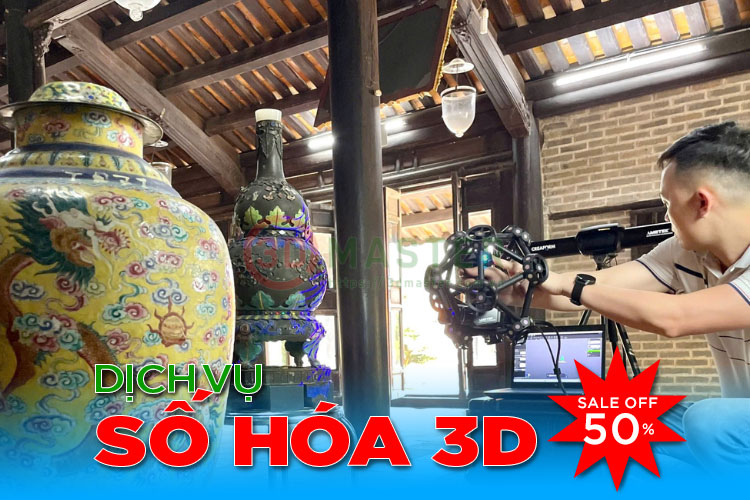
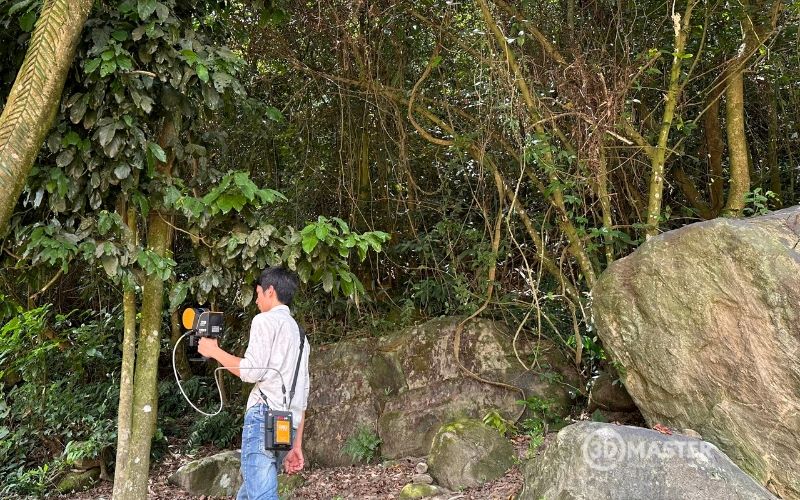
In its presentation, 3D MASTER emphasized the application of 3D digitization technology and the role of 3D scanning in creating “Digital Twins” for museum artifacts.
For rare or scientific reference specimens such as rhino horns, elephant tusks, and fossilized bones discovered in the Krông Nô volcanic cave system, 3D scanning creates a perfect digital replica permanently stored in digital space without concern for deterioration over time.
3D technology scans the entire artifact surface, collecting data in the form of point clouds and 3D mesh models, accurately capturing even the smallest details such as:
After processing, the data can be used to build digital archives, support scientific research, or recreate artifacts in virtual reality environments. International scientists can access the museum’s 3D Big Data system for online interaction and measurement.
For rare museum specimens, 3D digitization also helps reduce the frequency of direct contact with original artifacts. This is especially important for specimens with significant age or sensitive preservation conditions.
.jpg)
If the completion of the Hồ Gươm turtle replica in 2019 was considered a multidisciplinary handcrafted achievement, today, with support from 3D printing technology provided by 3D MASTER, restoration and fabrication processes can achieve optimal efficiency and absolute mechanical accuracy.
For paleontological and archaeological specimens that are incomplete or fragmented due to decomposition, AI algorithms combined with 3D digitization allow missing structures to be digitally reconstructed on computers. Industrial 3D printers can then accurately produce the missing components for complete restoration.
Additionally, to support the expansion of large-scale exhibition spaces at the new 38-hectare facility in Kiều Phú, Hanoi, using high-end 3D printing materials to create exhibition models that are 99.9% identical to the originals is considered an optimal solution.
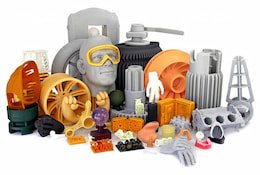
From 3D scan data, artifact models can be reproduced using various materials. These restored versions help museums:
The original specimens can be safely preserved in national archives while visitors still enjoy vivid and lifelike exhibition models.
.jpg)
Although the current “Evolution of Life” exhibition hall covers only 300m², it welcomes approximately 50,000–70,000 visitors annually.
Clearly, public demand for learning and immersive experiences is extremely high, while physical exhibition space remains limited.
According to its future development orientation, the Vietnam National Museum of Nature is focusing on building a large-scale data system to support research and specimen management.
Within this ecosystem, 3D data serves as a highly valuable visual data layer. Beyond storage purposes, 3D scan data can also integrate into:
This represents an important step toward making Vietnam’s natural heritage more accessible, especially for younger generations and the international community.
.jpg)
Through this presentation, 3D MASTER aims to share practical experience in artifact digitization, model restoration, and the application of 3D technology in heritage preservation.
With more than 10 years as an official distributor of Creaform 3D scanning solutions in Vietnam, 3D MASTER possesses a diverse demo equipment system and a highly specialized technical team, ready to implement high-precision digitization projects for museums, research institutes, and businesses.
More than just a technological solution, 3D digitization is becoming a bridge between traditional preservation and modern digital transformation.
Building digital databases for artifacts not only preserves scientific value today but also creates a foundation for future research, education, and heritage development.
3D MASTER’s presentation on the application of 3D digitization and 3D printing is not merely a technological concept, but a strategic solution accompanying the remarkable transformation journey of the Vietnam National Museum of Nature in the digital era.
The combination of profound scientific expertise from museum specialists and advanced 3D digitization/3D printing technologies from 3D MASTER is the key to preserving the past, optimizing the present, and opening the gateway of Vietnam’s natural heritage to future generations.
Steadily advancing the heritage journey → Digitize in 3D today!