3D Design and Inspection Technologies in UAV Manufacturing for Modern Warfare
3D Design and Inspection Technologies in UAV Manufacturing for Modern Warfare
Posted Date: 22-06-2026
3D Design and Inspection Technologies in UAV Manufacturing for Modern Warfare
In modern warfare, the demand for rapid deployment, high precision, and continuous upgrades is creating significant challenges for the UAV manufacturing industry. Traditional design and inspection methods are no longer sufficient to meet increasingly stringent requirements for quality and development speed.
As a result, 3D design, 3D scanning, and 3D inspection technologies have become essential foundations for optimizing unmanned aerial vehicle (UAV) manufacturing processes, improving performance, and enabling rapid adaptation to real-world combat requirements.
3D Scanning Technology Supporting Modern UAV Design and Manufacturing
1. The Role of 3D Design and 3D Inspection Throughout the Military UAV Development Cycle
In modern combat environments, military UAVs cannot tolerate even the smallest dimensional error, as a simple geometric deviation can compromise an entire reconnaissance or strategic strike mission.
The combination of 3D design and 3D inspection serves as a powerful technological tool that standardizes defense products from digital design through final deployment.
Accelerating strategic weapon R&D: 3D design enables rapid simulation of airflow and collision scenarios, reducing physical prototype development time by up to 60%.
Optimizing stealth performance (RCS): Smooth surface design helps minimize radar cross-section while improving aerodynamics, allowing UAVs to fly higher and more efficiently.
Ensuring structural integrity of carbon-fiber airframes: 3D inspection detects microscopic deviations (<0.02 mm), ensuring the airframe can withstand aggressive maneuvers without cracking or failure.
Synchronizing payload integration: Ensures reconnaissance cameras, sensors, and mission modules fit perfectly within the UAV structure.
Eliminating vibration and protecting signal quality: Inspection of propeller shafts and motor alignment helps prevent vibration, communication interference, and camera instability.
Supporting rapid post-mission repair: Quickly scans damaged UAVs after deployment and reconstructs CAD models for emergency maintenance operations.
Enhancing security and standardization in defense manufacturing: Creates highly secure Digital Twins for confidential storage and rapid mass production when required.
2. Applications of 3D Scanning Technology in Reverse Engineering and UAV Upgrades
2.1 Reverse Engineering Existing UAV Components
Reverse engineering has become a critical process for organizations seeking to master technology, improve designs, and localize UAV components without relying on foreign supply chains.
Recreating CAD files for components with missing drawings: Scan existing or imported mechanical parts and reconstruct accurate CAD models for replacement manufacturing.
Improving aerodynamic profiles: Modify wing and tail surfaces directly within 3D models to enhance lift and reduce drag.
Localizing material supply chains: Convert molded plastic components into digital models for manufacturing with advanced carbon fiber composites or fiberglass 3D printing.
Expanding payload compartments: Modify airframe structures within CAD software to accommodate larger batteries, cameras, or next-generation sensors.
Rapid mold manufacturing from existing components: Scan external housings to accurately design injection molds and carbon-fiber composite molds.
Weight optimization and structural analysis: Use reverse-engineered models to reduce material thickness in non-load-bearing areas, resulting in lighter UAVs.
Improving assembly compatibility: Redesign joints, brackets, and motor mounts based on scanned data to achieve perfect fit during large-scale production.
2.2 Digitizing Complex Structures Difficult to Measure with Traditional Methods
Many UAV components feature highly complex geometries that are extremely difficult to measure accurately using conventional tools.
Examples include aerodynamic wing and fuselage surfaces, which directly influence lift, drag, and overall flight performance.
3D scanning technology captures millions of measurement points within a short period of time, creating highly accurate digital representations of physical components.
Additionally, composite structures, lightweight materials, and additively manufactured parts can be digitized quickly and efficiently. This enables engineers to accurately evaluate product quality and optimize future UAV designs.
3. 3D Inspection for Quality Control of UAV Components and Structures
3D inspection serves as a critical defense line against geometric defects before UAV deployment, ensuring the reliability of expensive onboard systems.
Composite mold validation: Scan mold surfaces used for carbon-fiber manufacturing to verify dimensional accuracy before production.
Precision verification of wing profiles: Compare scanned wing geometries against original CAD models to ensure aerodynamic performance meets specifications.
Motor shaft concentricity and balance inspection: Detect alignment deviations that could cause vibration and compromise flight safety.
Airframe flatness and thickness verification: Use Color Map analysis to identify thin areas, delamination, or deformation within composite structures.
Inspection of mechanical assembly interfaces: Measure critical mounting points for batteries, cameras, and flight-control systems.
Structural deformation analysis after load testing: Scan the entire UAV structure following stress testing to identify hidden cracks and deformations.
Automated quality control for mass production: Integrate 3D scanners into production lines for rapid dimensional verification according to industrial standards.
4. 3D Technologies Enabling Rapid UAV Production in Battlefield Conditions
In combat environments, manufacturing speed and supply-chain independence often determine operational success.
The adoption of 3D technologies enables rapid repair, reproduction, and optimization of UAV systems directly in operational areas without dependence on rear logistics support.
Emergency repair through 3D-printed replacement parts: Scan damaged landing gear, camera mounts, or protective covers and reproduce them using engineering-grade materials.
Reproducing damaged propellers with aerodynamic accuracy: Reverse engineer intact blades and manufacture replacement components rapidly.
Rapid integration of field-deployed payloads: Scan UAV airframes and quickly design mounting brackets for mission-specific equipment.
Detecting thermal and impact-related deformation: Use handheld 3D scanners to identify hidden cracks and structural damage after operations.
Producing maintenance fixtures in the field: Reverse engineer assemblies and rapidly manufacture fixtures for motor replacement and electronics repair.
Digitizing captured enemy UAVs for intelligence analysis: Scan recovered systems to reconstruct CAD models, analyze technologies, and identify structural weaknesses.
Deploying mobile UAV manufacturing workshops: Combine portable 3D scanners and high-speed 3D printers to establish mobile battlefield R&D and production facilities.
A growing trend involves distributed UAV manufacturing networks. Instead of relying on a single centralized factory, multiple production facilities can manufacture components using the same digital data set.
This approach improves supply-chain resilience and operational flexibility under wartime conditions.
5. Future Trends in 3D Design and Inspection Technologies for Military UAVs
Over the coming years, 3D design and inspection technologies will continue evolving into core pillars of UAV research, manufacturing, and lifecycle management within the defense sector.
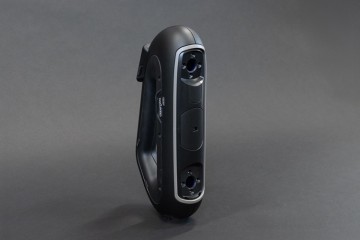
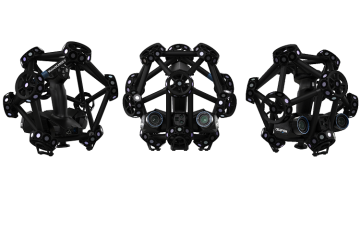
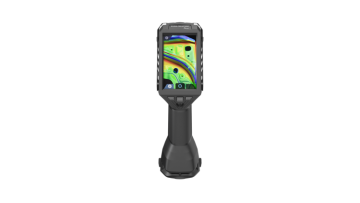
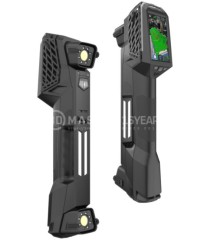
The combination of advanced 3D design tools and metrology-grade measurement solutions such as the Creaform HandySCAN EVO is reshaping standards for strategic UAV development.
Digital Twin technology: Every UAV can be associated with a digital replica containing design, manufacturing, operational, and maintenance information throughout its lifecycle.
Real-time condition monitoring and predictive maintenance: Operational data from UAVs can be synchronized with digital models to identify early signs of degradation and support maintenance planning.
AI-powered inspection automation: Artificial intelligence can analyze 3D scan data, detect geometric deviations, and evaluate quality faster than traditional manual methods.
Robotic inspection and quality control: Robots equipped with 3D scanning systems can automate inspection processes while increasing consistency and accuracy.
Integration into digital defense manufacturing ecosystems: Design, production, inspection, and operational data can be connected through a unified digital platform.
Development of smart UAV factories: Digital technologies can manage workflows from design through assembly, improving productivity and reducing manufacturing lead times.
Scalable wartime UAV production: Standardized 3D data and automated production processes enable rapid expansion of manufacturing capacity during critical periods.
These advancements will not only improve UAV production efficiency but also provide the foundation for intelligent, flexible, and highly adaptive combat systems capable of meeting the evolving demands of modern warfare.
3D MASTER is proud to be the official distributor of Creaform solutions in Vietnam for more than 10 years, providing demonstration equipment, specialized technical support, and comprehensive 3D measurement solutions for UAV research, design, and manufacturing applications.
3dmaster:Cảm ơn anh Khoa ạ. ???? Thực tế UAV là một trong những lĩnh vực ứng dụng scan 3D rất nhiều vì yêu cầu độ chính xác cao, đặc biệt ở thân máy, cánh và các chi tiết lắp ghép. 3 tháng trước
.jpg)