What is cultural heritage digitization, and can modern technologies such as 3D scanning ensure that priceless artifacts remain completely intact? In the era of digital transformation, applying 3D scanning technology to preserve, restore, and promote cultural heritage is becoming an inevitable trend worldwide, providing a sustainable preservation solution for the future.
Heritage digitization is the process of converting cultural and historical values from physical or intangible forms into digital data for storage, management, and exploitation.
It is considered an important "technological shield" for protecting heritage values against the effects of time and natural disasters.
.jpg)
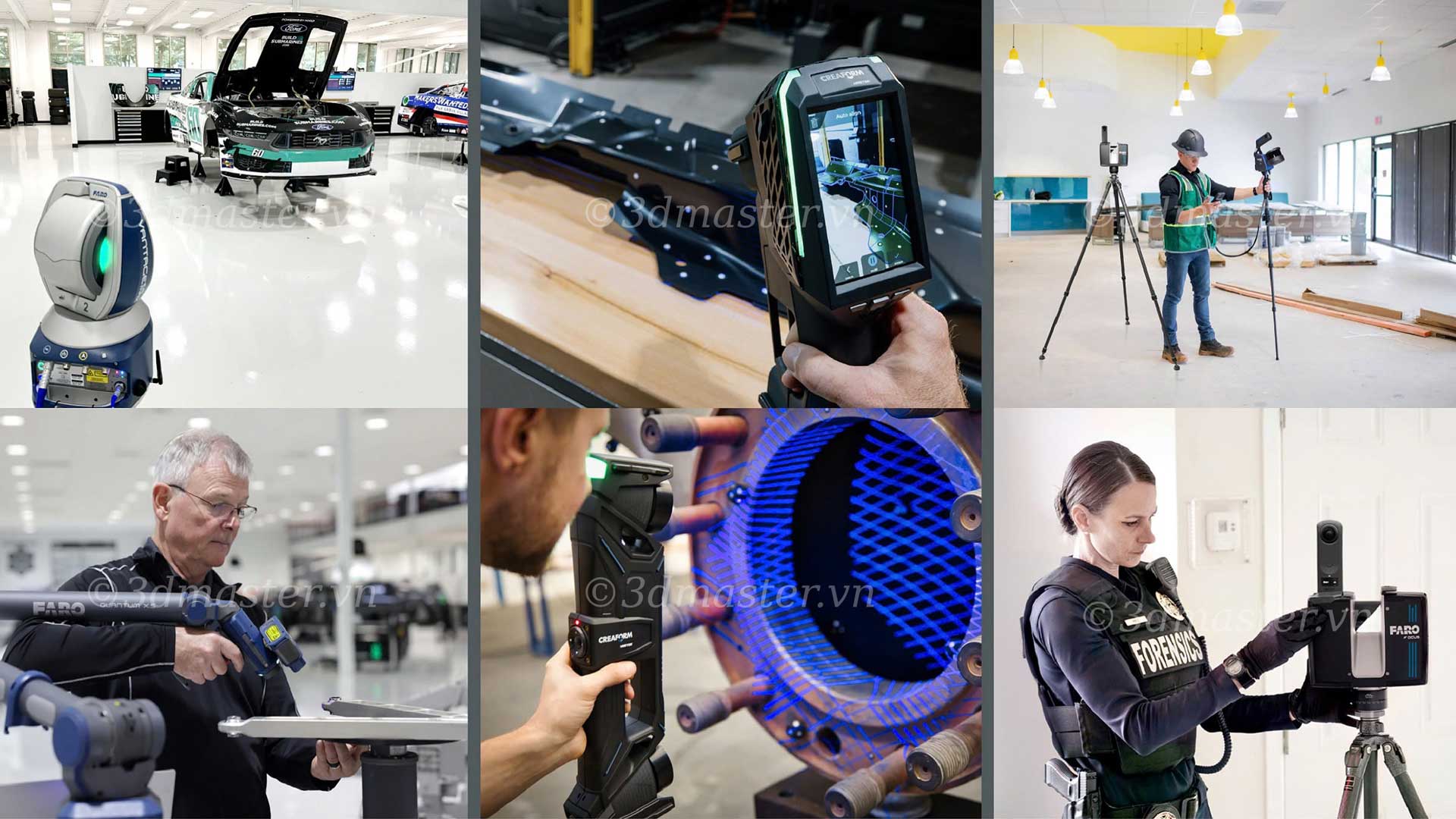
Within the overall ecosystem of digital preservation technologies, 3D scanning plays a core role in recreating artifacts with a high level of fidelity. This technology accurately captures the spatial coordinates and surface geometry of objects to create high-quality digital replicas.
The answer is absolutely NO, when appropriate professional 3D scanning equipment is used and the process follows standard procedures.
Modern 3D scanning applies advanced technical principles to ensure the safety of artifacts throughout the scanning process:
This is also why 3D scanning technology has been selected by many museums, research institutes, and conservation organizations around the world to digitize artifacts that are hundreds or even thousands of years old.
.jpg)
To ensure highly accurate data while keeping artifacts completely safe, heritage digitization should follow a professional surveying and 3D scanning process.
- Step 1: Survey & Condition Assessment: Ensuring a safe working environment.
Experts assess the material, mechanical durability, and surface characteristics of the artifact while surveying the lighting and temperature conditions at the site.
- Step 2: Planning & Equipment Setup: Optimizing scanning parameters.
The appropriate 3D scanning technology is selected, and the working space is arranged to ensure a non-invasive scanning process.
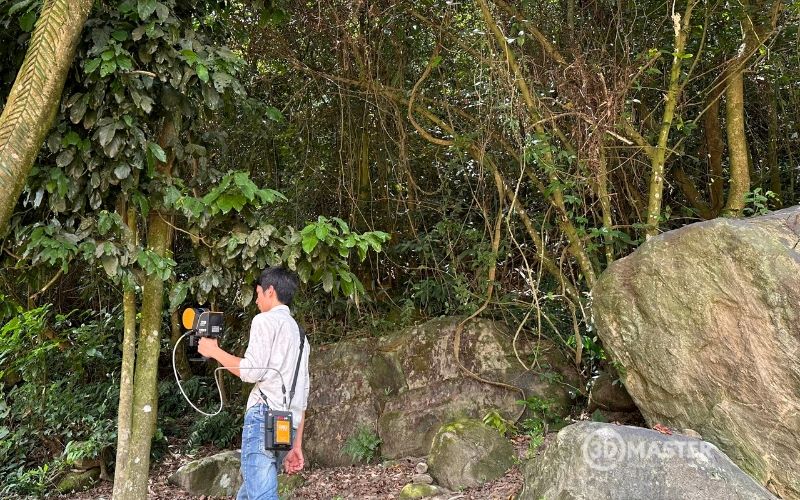
- Step 3: 3D Scanning & Image Data Acquisition: Performing non-contact scanning.
The artifact is scanned from multiple angles to capture its complete geometry, while high-resolution photographs are taken to obtain accurate color maps.
- Step 4: Raw Data Processing & Registration: Building the digital model.
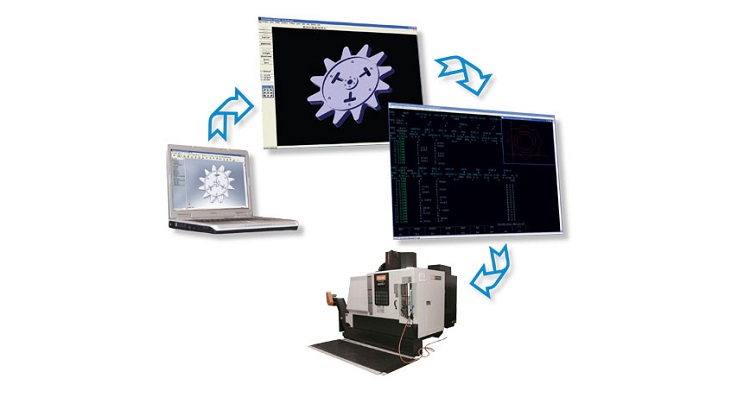
Specialized software is used to clean the Point Cloud data, align the point meshes, and reconstruct the surface as a Polygon Mesh.
- Step 5: Color Matching & Quality Inspection: Finalizing the digital replica.
Real-world colors are applied to the 3D model, measurement accuracy is verified against the original artifact, and the data is packaged in standard formats (OBJ, STL, FBX, PLY).
.jpg)
The results of cultural heritage digitization open up significant opportunities for both preservation and the development of tourism and education.
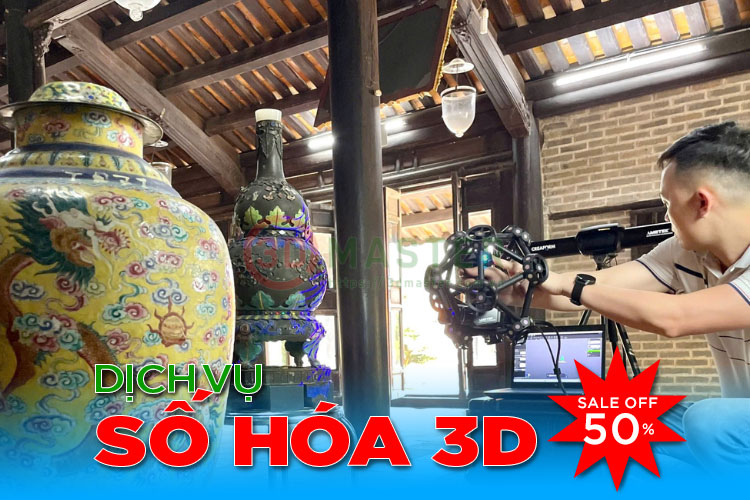
Heritage digitization requires a combination of high-precision measurement technology and knowledge of artifact conservation. Therefore, choosing the right service provider will determine both the quality of the data and the safety of the artifacts throughout the implementation process.
A professional heritage digitization provider should meet the following criteria:
Where can you find heritage digitization services in Hanoi? 3D Master – With many years of experience in industrial 3D scanning and heritage digitization, 3D Master has participated in numerous projects involving the digitization of artifacts, statues, architectural structures, and heritage spaces in Vietnam.
In addition, 3D Master has been an official Creaform distributor in Vietnam for more than 10 years, with a complete range of demonstration equipment and an experienced technical team ready to provide consulting, demonstrations, and 3D scanning solutions for businesses, research institutes, and cultural heritage digitization projects.
In addition to providing 3D scanning services, 3D Master also supports 3D data processing, reverse engineering, digital model restoration, and the development of databases for conservation, research, and exhibition purposes. This is a comprehensive solution that helps museums, research institutes, and heritage management organizations preserve cultural values through modern technology while creating a foundation for digital transformation in the cultural heritage sector.
In conclusion, understanding what cultural heritage digitization is helps conservation organizations choose appropriate solutions to preserve and promote heritage values in the digital era. With its non-contact operation, safety, and high accuracy, 3D scanning technology is becoming an important tool for conservation, restoration, and digital database development, contributing to the preservation of cultural values for future generations.
3D Master Contact Information: