The challenges of modern battlefields have demonstrated the significant effectiveness of unmanned aerial vehicles. Among them, the research and development of Vietnamese loitering munitions is becoming a strategic task aimed at strengthening defense self-reliance. This article analyzes approaches to manufacturing different types of UAVs in Vietnam, the possibility of Vietnam manufacturing missile-carrying UAVs, and solutions for applying 3D technology to shorten the development time of UAVs manufactured in Vietnam.
Loitering munitions are a type of unmanned aerial vehicle designed to carry out attack missions and are not recovered after completing their mission.
These UAVs carry explosive warheads and can loiter in the air for hours to actively search for targets. Once an opposing target is detected, the UAV dives directly toward it and detonates to achieve a precise strike.
The development of UAVs manufactured in Vietnam currently faces a number of major challenges.
Nevertheless, the opportunities for breakthroughs in the domestic UAV manufacturing sector are also clear. Vietnamese engineers have developed expertise in embedded systems and automatic control algorithms.
Developing and manufacturing UAVs domestically can significantly reduce costs compared with importing defense equipment while also enabling flexible designs for different types of loitering munitions according to specific requirements.
Vietnam has favorable conditions for developing a domestic UAV ecosystem. Decision No. 2815/QD-TTg sets a target of mastering at least 60% of core UAV technologies by 2027 and increasing this figure to at least 80% by 2030.
.jpg)
Unlike reconnaissance UAVs or civilian UAVs, this type of vehicle belongs to the defense technology sector and has high requirements for reliability, integration capabilities, and safety control.
Businesses can choose different development and manufacturing models depending on their level of technological mastery, R&D capabilities, production scale, and component manufacturing capacity.
For sensitive defense systems, specifications related to operational configuration, weapon payloads, guidance, or specific manufacturing processes are not fully disclosed.
Therefore, the development of UAVs can be viewed from the perspective of aerospace engineering and industrial manufacturing as follows:
3D technology creates highly accurate digital data from physical objects or design models. This data can be used throughout the UAV development process.
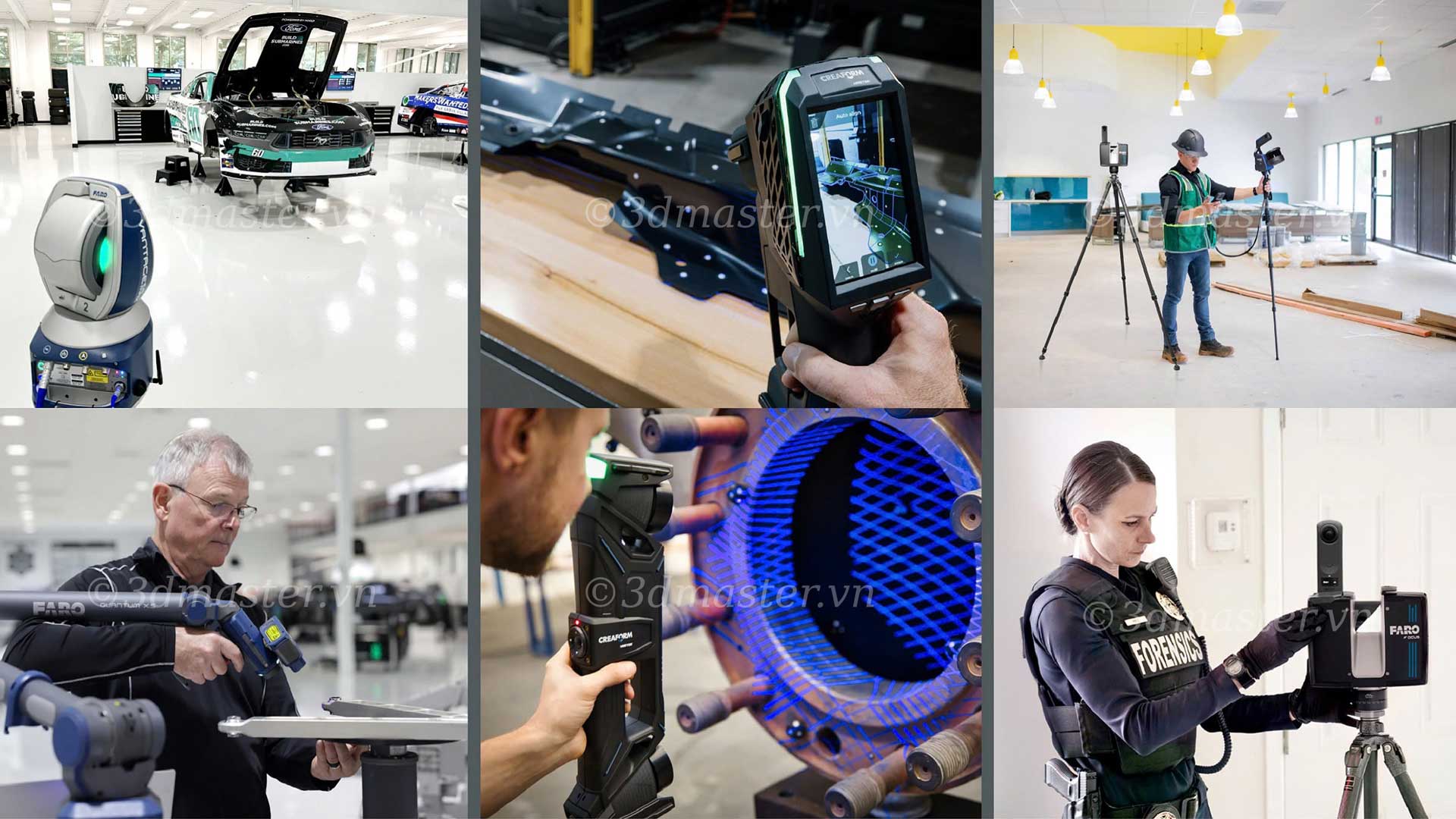
3D scanning is a technology that uses optical or laser sensors to capture millions of points on an object's surface. These data points are combined into a 3D model, providing engineers with a visual basis for analysis and design development.
Advantages:
3D scanning can be used to digitize UAV components, create reference data for reverse engineering, and support improvements to CAD models.
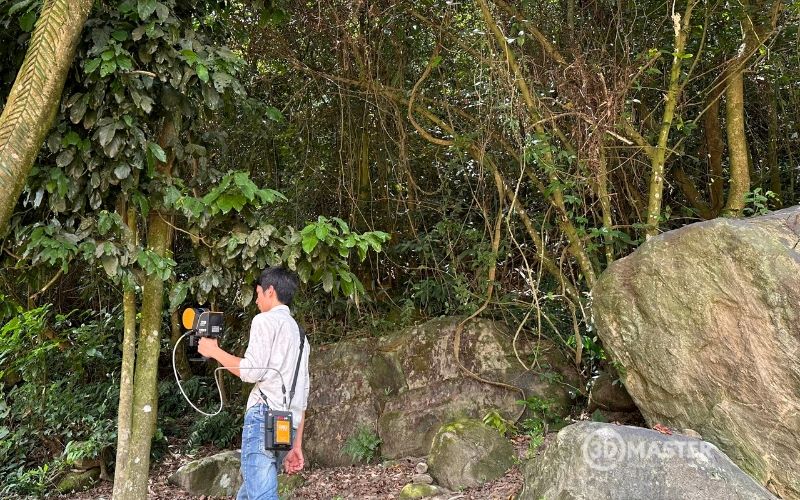
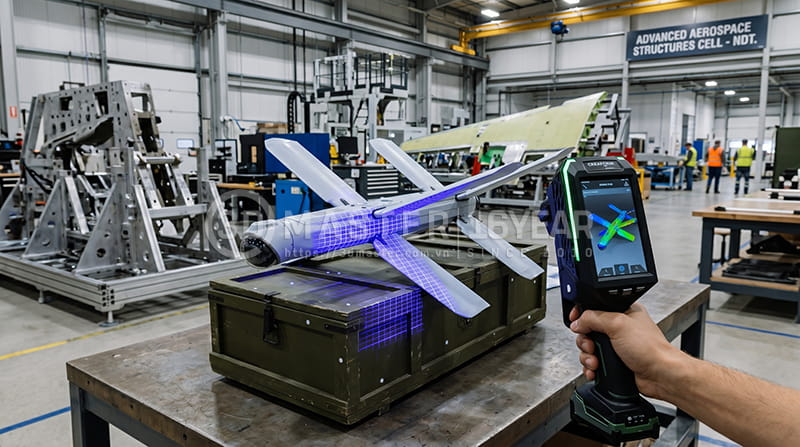
3D measurement is a method of collecting geometric data from manufactured products and comparing it with CAD models or technical requirements. Measurement results make it possible to identify deviations across the entire surface rather than checking only several individual points.
Advantages:
3D measurement can be used to inspect components after machining, compare them with CAD models, and identify deviations before assembly.
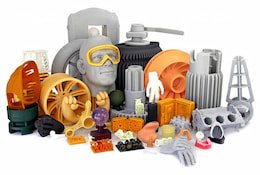
3D printing is a manufacturing method that creates physical objects directly from 3D models by building products layer by layer. This technology is particularly suitable for the R&D stage when businesses need to test and modify designs continuously.
Advantages:
3D printing can be used to create prototypes, test models, fixtures, and supporting tools during UAV development.
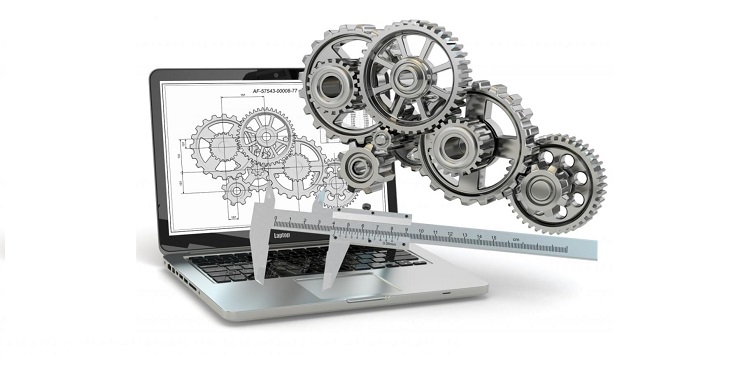
Reverse engineering is the process of capturing the shape of a physical component using 3D scanning and then processing the data to reconstruct a CAD model. This approach is suitable when a business has a physical sample but lacks the original drawings or design data.
Advantages:
Reverse engineering can be used to digitize existing UAV components, restore CAD data, and provide a foundation for product improvement, manufacturing, or inspection.
To successfully develop a Vietnamese loitering munition, organizations applying 3D technology need to follow the following 5 standardized steps:
Step 1: 3D scanning to digitize components and form:
Use a 3D scanner to capture spatial data from reference components such as wings, fuselage sections, or mechanical parts. This process generates accurate Point Cloud data.
Step 2: Build CAD drawings and optimize aerodynamics:
Engineers perform reverse engineering based on the scanned data to complete the 3D model in CAD software. At this stage, the design is refined to optimize aerodynamic characteristics and allocate space for the engine, battery, and warhead.
Step 3: 3D printing for prototype production and assembly testing:
A 3D printer rapidly produces a prototype UAV frame and shell. Engineers can then test-fit electronic circuits and actual mechanical components to identify potential spatial conflicts at an early stage.
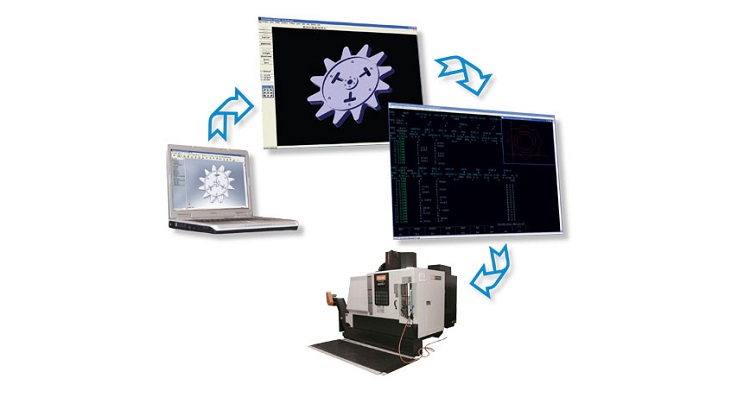
Step 4: CNC mold machining from 3D data:
Once the design has been finalized, 3D data can be transferred directly to a CNC machine to mill molds for composite or carbon-fiber components. This approach helps ensure that mass-produced UAV shells achieve high strength and low weight.
Step 5: 3D scanning for output quality control (QC):
The completed product is scanned again using a 3D scanner and directly compared with the original CAD drawing. This helps control manufacturing deviations, maintain consistency, and verify dimensional balance across the production batch.
.jpg)
YES. 3D technology can provide an important technical foundation for the development and manufacturing of missile-carrying UAVs. Integrating missiles onto UAVs requires high levels of mechanical and aerodynamic precision. 3D technology can contribute to four important technical areas below:
To develop UAVs, businesses do not necessarily need to invest in an entire 3D equipment system from the beginning. They can start by outsourcing services for processes that require high levels of precision.
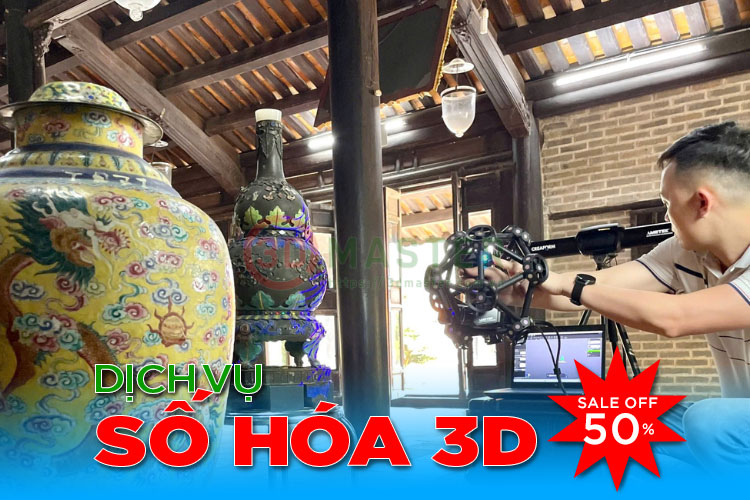
3D MASTER currently provides a range of services including 3D scanning, 3D measurement, reverse engineering, 3D printing, and CAD/CAM/CNC. Businesses can use individual services or combine them into a complete digitization and manufacturing workflow.
In summary, for businesses researching and manufacturing Vietnamese loitering munitions, 3D technology can become part of a closed-loop technical data workflow. From physical samples to CAD, from CAD to prototypes, and then from physical products back to inspection. This approach can help shorten development time and improve quality control as production scales up.
3D Master Contact Information: