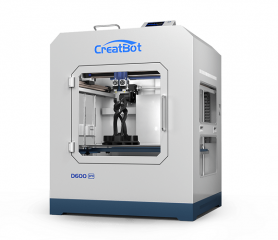
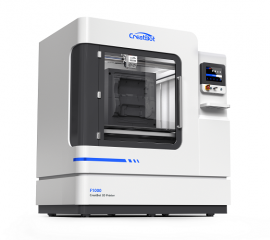
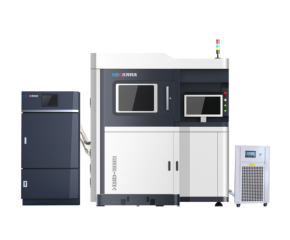
More manufacturers are considering 1 m × 2 m large-format 3D printers for producing oversized prototypes. Investing in an industrial 3D printer of this size requires a substantial budget and the technical expertise to operate it. Some businesses have lost entire prints or incurred unnecessary costs because they underestimated the demands of large-format plastic 3D printing. This guide explains what these machines can do, where problems can arise, and what to check before you buy.
A 1 m × 2 m large-format 3D printer is an industrial additive manufacturing system that typically uses fused deposition modeling (FDM) with filament or extrusion with plastic pellets. It has a build area of 1,000 mm × 2,000 mm and a Z-axis build height of 1,000 mm or more.
This build area allows the printer to produce parts up to 2 meters long in one piece, without splitting the design file. Printing in one piece offers several manufacturing benefits:
Maintain consistent mechanical strength: Printing a part in one piece eliminates potential weak points at adhesive or heat-welded joints. This can improve load-bearing performance and reduce the risk of cracking at seams during load testing.
Reduce post-processing time: Technicians can save hours of sanding, filling, and concealing seams between separately printed sections.
Improve assembly accuracy: A one-piece print avoids the cumulative dimensional errors that can arise when aligning and joining sections by hand.
Streamline production: The machine can run continuously to produce architectural models, promotional sculptures, or automotive bumpers in a single print job.
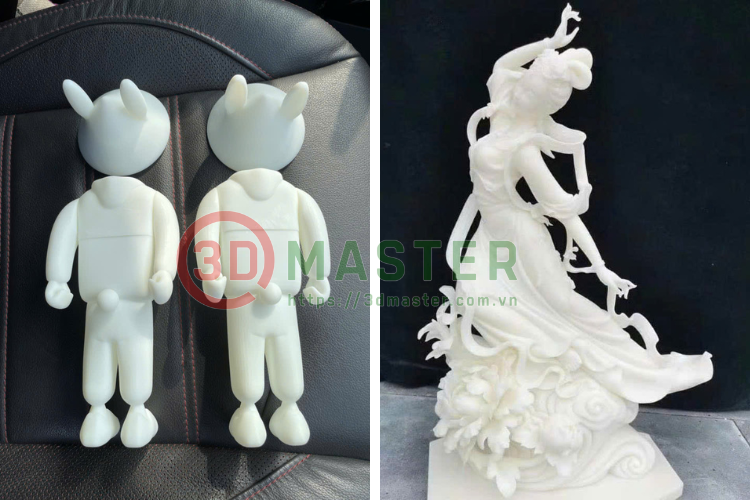
Operating a 2 m large-format 3D printer differs substantially from using a small desktop printer. Consider these five technical factors before investing:
A failure can ruin a print that has been running for days: Large prints often take 48 to more than 100 hours to complete. A single power outage, filament break, or nozzle clog can ruin a print containing tens of kilograms of plastic.
A rigid frame matters when printing tall parts: Rapid printhead movements more than 1 meter above the build plate can cause significant vibration. A thin aluminum frame or insufficient bracing can lead to surface ripples and layer shifts.
An open frame can increase the risk of warping and layer separation: Engineering plastics such as ABS and ASA can shrink as they cool, especially when exposed to drafts. Without an enclosure that retains heat, layers can separate and corners can lift off the build plate.
Extrusion flow rate determines how fast the machine can actually print: A travel speed of 500 mm/s tells you little about print time if the extruder cannot melt and deliver plastic fast enough. Check the maximum volumetric flow rate in mm³/s and the available nozzle diameters, ranging from 0.8 mm to 6.0 mm, when estimating actual print times.
Power, supporting equipment, and floor space add to the cost: A 2 m² heated bed can draw considerable power to maintain a stable temperature. The facility needs enough floor space, an adequate electrical supply, and a dedicated filament dryer that can accommodate large spools weighing 3–5 kg.
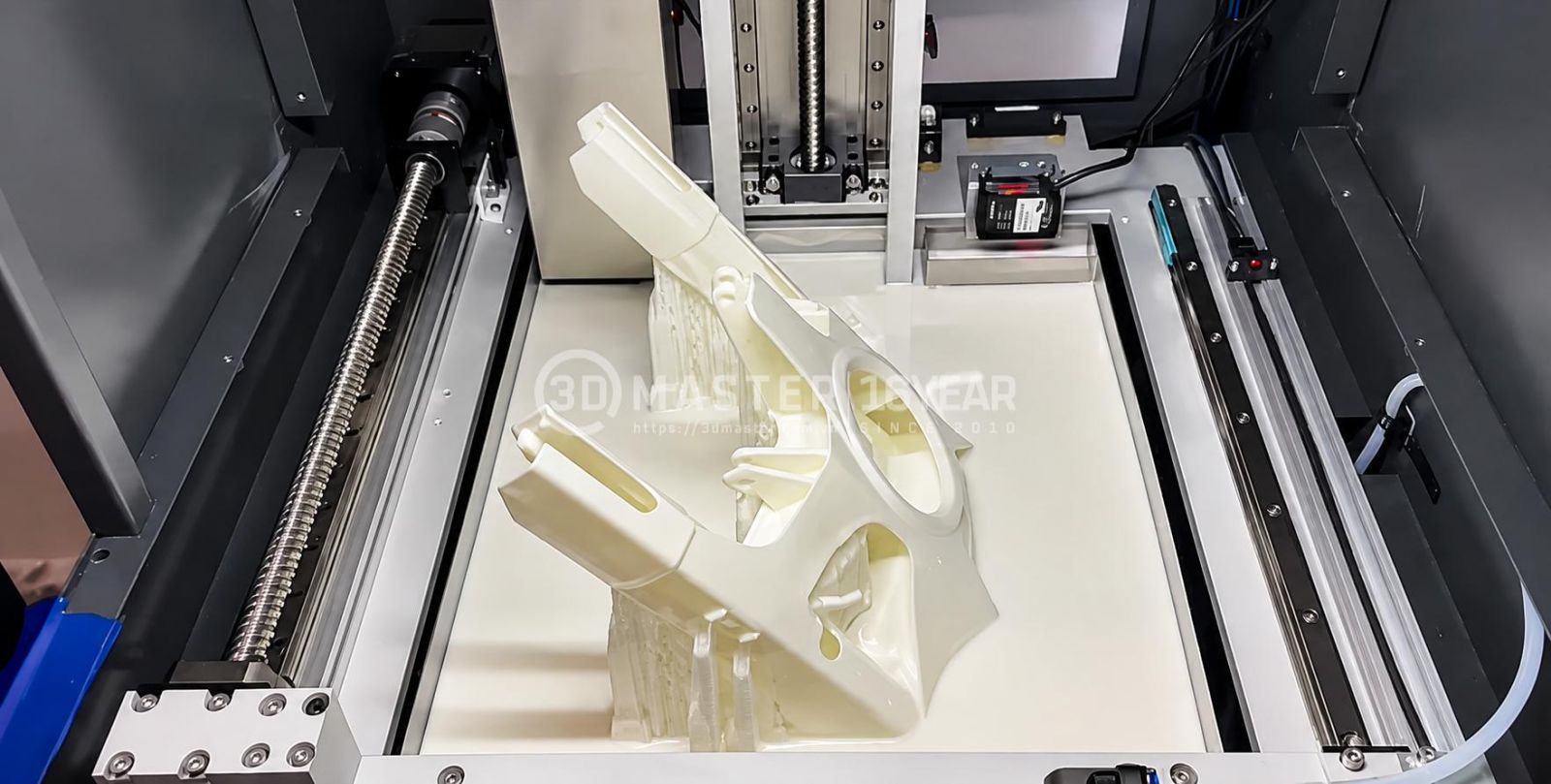
Visit the supplier’s showroom to see how the printer performs under real operating conditions. Check the following before you make a decision:
Frame and motion system: Look for a rigid frame made of thick-walled box-section steel or solid aluminum alloy. Industrial linear guides and servo motors help maintain positioning accuracy.
Heated bed and bed leveling: A 1 m × 2 m build plate should have independently controlled heating zones to help reduce power consumption. Check that the machine uses automatic multipoint bed probing to compensate for variations in build plate flatness.
Operational safety and print recovery: Test whether the printer saves its position after a power outage and detects when filament runs out. Check for nozzle overtemperature protection and an emergency stop button that is easy to reach.
Test print using your own design: Bring a design file and ask the supplier to run it at high speed. Observe how smoothly the machine moves, how well the first layer adheres, and how consistent the finished surface looks.
Material feed system and high-temperature extruder: Check whether the filament feed system uses dual hardened-steel drive gears and can reliably feed filament from a 5 kg spool. An extruder rated for 300°C to 350°C can support engineering plastics that require higher printing temperatures.
Whether you’re considering an affordable large-format 3D printer or a high-end industrial model, base your decision on the economics of your operation. Compare your needs with the situations below.
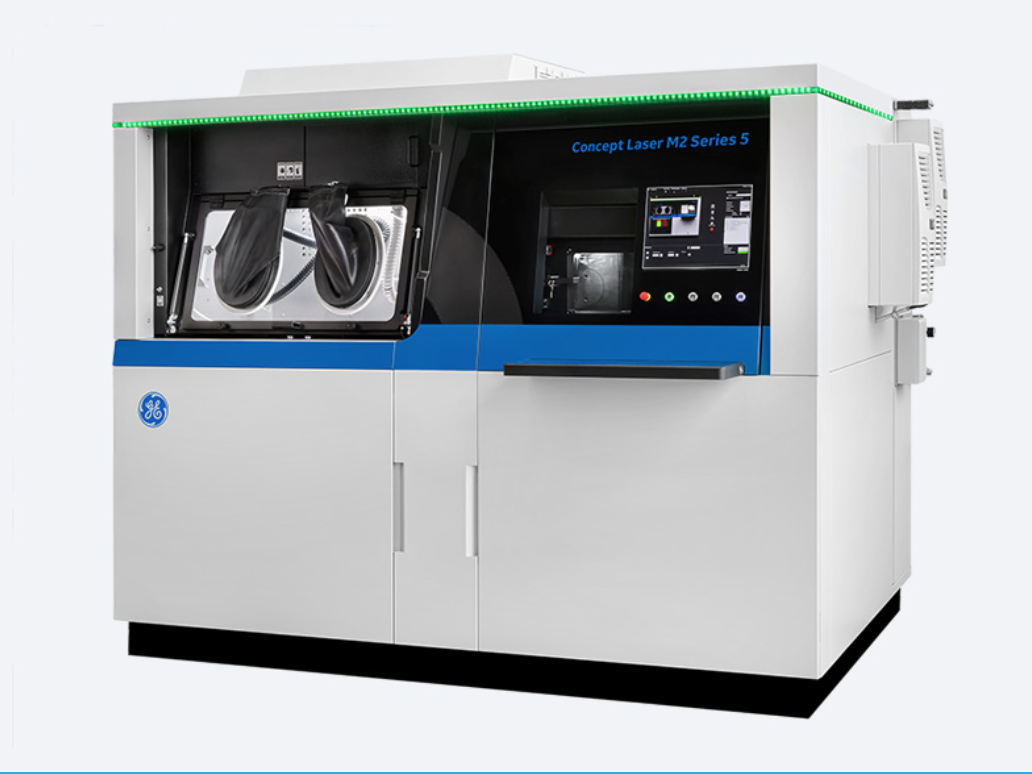
Some suppliers sell locally assembled 1 m to 2 m large-format 3D printers at low prices. Check operating stability and spare parts availability before committing to a purchase.
Manufacturers and research institutes in Vietnam turn to 3D Master for equipment and support to keep their production systems running over the long term.
Authorized distribution: As an official CreatBot distributor, 3D Master supplies meter-scale printers with rigid, one-piece steel frames and servo motors designed for continuous operation.
Free test prints: Bring your 3D file to the Hanoi or Ho Chi Minh City showroom for a test print and inspect the finished part before buying.
Configuration advice based on your budget: Experienced engineers assess your technical requirements and help you choose equipment suited to your application and budget.
On-site installation and warranty support: 3D Master provides operator training, keeps replacement parts in stock, and offers technical support throughout the machine’s service life.
Does a part that measures exactly 2,000 mm need a printer with more than 2,000 mm of travel?
It may if the brim or support structures extend beyond the usable build area. Slice the file using the printer’s actual machine profile to check.
Can I print a 2 m part diagonally on a smaller machine?
It depends on the build volume. For a machine with a 1 × 1 × 1 m build volume, the longest possible diagonal is only about 1.73 m, so a 2 m part still exceeds the available space.
Will splitting a 2 m part into two sections let me print it on a 1 m machine?
It depends on how each section is oriented. When slicing, check that there is enough room for the joint features and the brim.
Can power-loss recovery save every print?
The printer can resume only if the recovery conditions are met. If the build plate cools and the part lifts or shifts, the new layers may be misaligned.
How should I compare prices for two 2 m large-format 3D printers?
Ask both suppliers to run the same file using the same material and acceptance criteria. Compare the equipment price, installation costs, and cost of producing one part that meets your requirements.
Investing in a 1 m × 2 m large-format 3D printer gives your business more control over prototyping and production of oversized parts. The return on that investment depends on choosing a configuration that fits your application and a supplier that can support it.
If you’re still weighing your options or want to see the equipment in action, contact 3D Master. Our engineers can review your requirements and run a free test print at the showroom so you can evaluate the results before buying.
>>> In-stock 3D printers are limited. Contact 3D Master today for a promotional quote.
3D Master Contact Information
Hotline / Zalo / Telegram / WhatsApp / LINE / Viber / KakaoTalk: +84 982 089 198 | 0986333960
Email: cuong3dmaster@gmail.com | hung3dmaster@gmail.com | tech3dmaster@gmail.com
Website: 3dmaster.com.vn