For thousands of years, humans have continuously sought ways to move faster. From domesticating animals to developing modern machines, the desire to conquer speed has always been one of the driving forces behind technological development.
In the maritime industry, 3D scanning technology is opening up new methods for measuring, inspecting, and restoring vessels with complex structures. One notable example is the restoration of a legendary hydrofoil that once set multiple speed records.
A hydrofoil is a type of watercraft equipped with lifting foils positioned beneath the hull. When the vessel reaches a certain speed, these foils generate lift, raising the hull above the water.
This design allows the vessel to achieve significantly higher speeds. As the hull rises above the water, the area in contact with the water is greatly reduced, which decreases drag and allows the vessel to move faster.
This operating principle is somewhat similar to that of a maglev train, where the vehicle is lifted above the track to reduce friction and improve transportation efficiency.
One of the most famous hydrofoils is L'Hydroptère, which was first launched in 1994. It was designed by Éric Tabarly and Alain Thébault and built with the participation of several major industrial companies in France.
The vessel became known as the first sailing boat to surpass the 50-knot mark and was once described as the “Concorde of the sea.” With its distinctive three-hull hydrofoil design, L'Hydroptère became an icon of speed and maritime engineering.
.jpg)
After years of operation and a period of being left at a port in Hawaii, the vessel was taken over by a dedicated team, which began a comprehensive restoration project.
The goal of the project was not only to return the vessel to operational condition but also to preserve a historically significant achievement in marine engineering.
To carry out the restoration, the engineering team needed a 3D measurement solution capable of:
Laser 3D scanning was selected to meet these requirements.
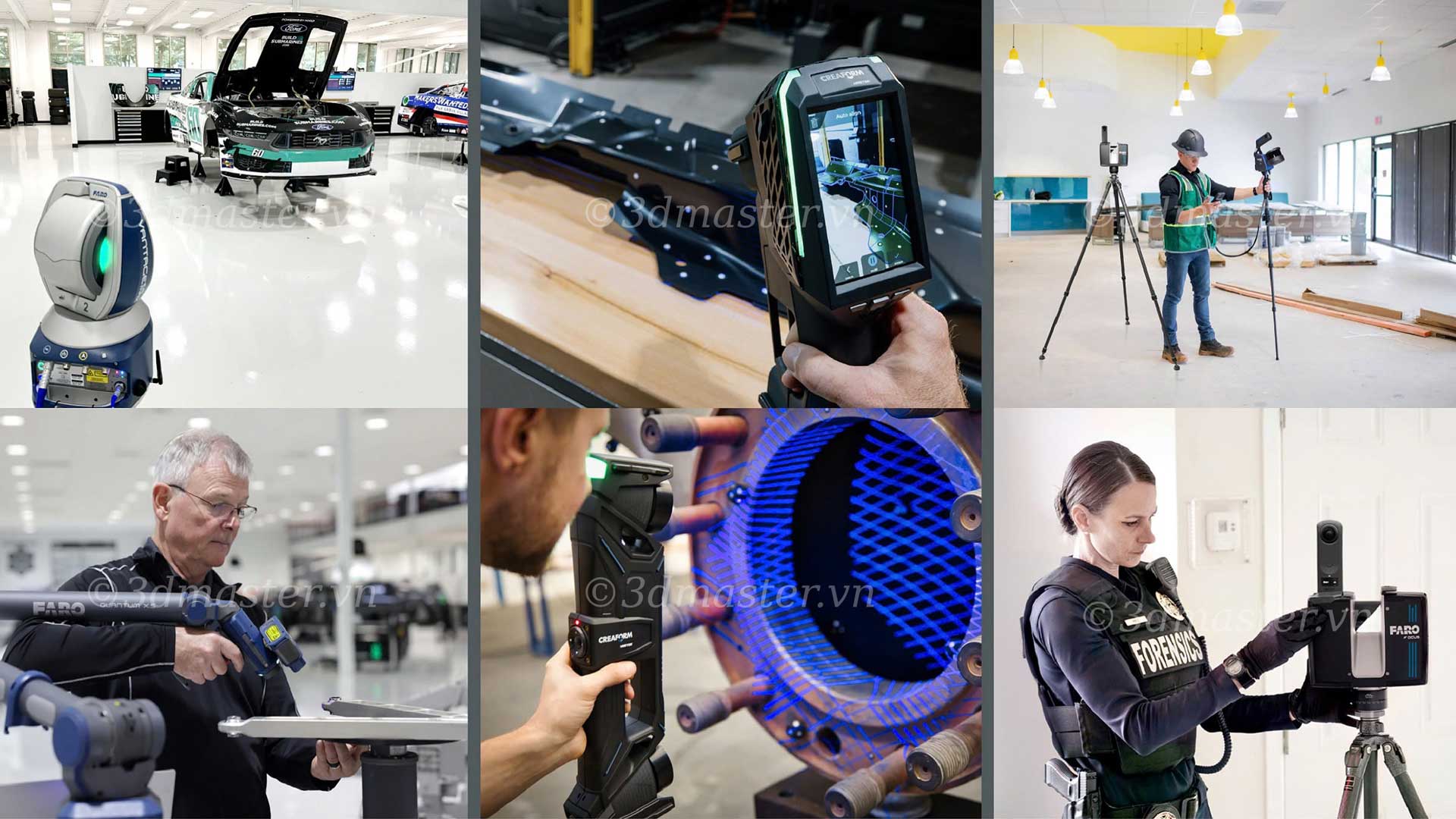
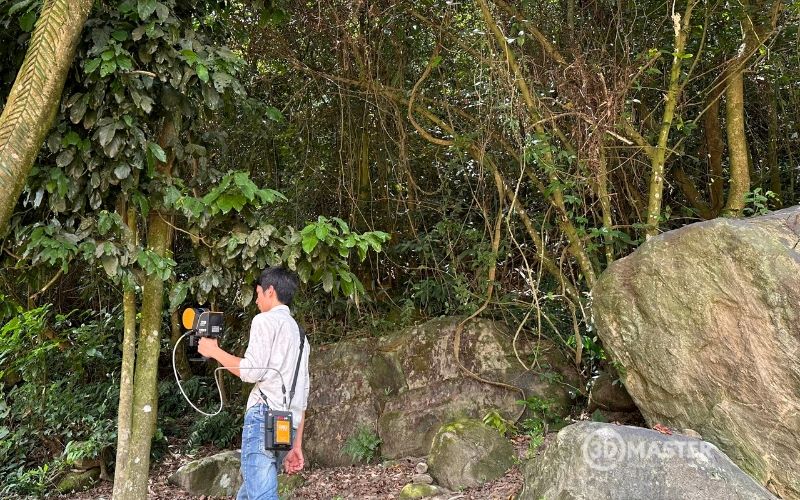
A handheld 3D scanner allows engineers to capture the geometric data of components directly on the vessel instead of removing the parts and transporting them to a specialized measurement facility.
One of the key tasks during the restoration was replacing an aluminum connecting component with a new version made from titanium.
The component had to withstand loads of more than 50 tons, meaning that the new material needed to provide higher strength and better resistance under demanding operating conditions.
The original component was manufactured from aerospace-grade 7175 aluminum. This material offers the advantage of being lightweight, but its long-term load-bearing capability is lower than that of titanium.
Titanium was selected because of its high strength while maintaining a relatively low weight. Compared with aluminum, titanium offers greater strength while remaining relatively lightweight. It also provides better fatigue resistance and deformation resistance when subjected to repeated loads.
However, manufacturing a new titanium component was not a simple task. The component had a custom geometry and had to fit precisely into the vessel's existing structure.
Therefore, before machining, engineers needed accurate geometric data of the component and the surrounding connection areas. This was where an industrial 3D scanner played an important role.
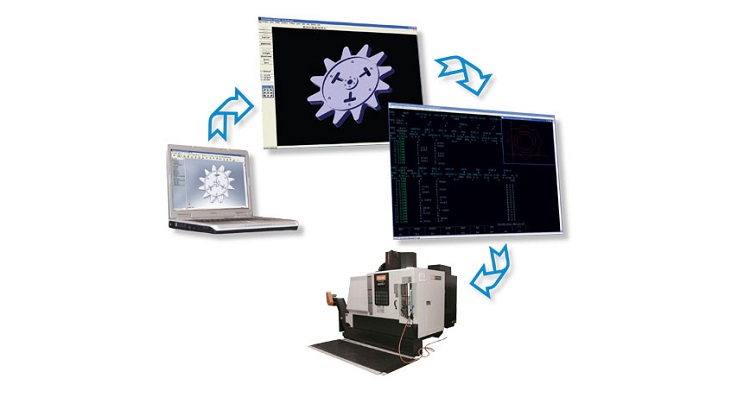
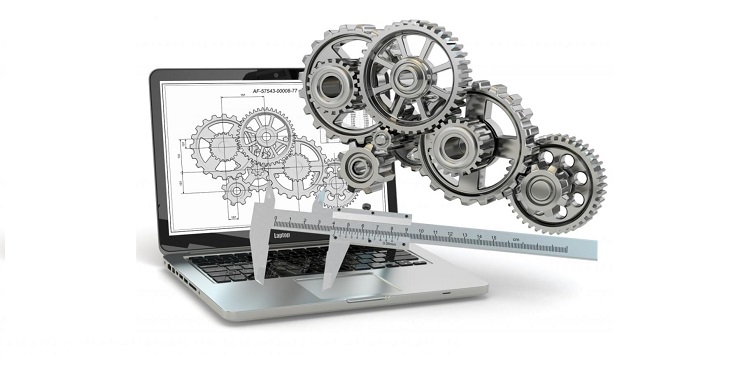
The scanning data enabled the actual shape of the component and surrounding structures to be accurately reconstructed. Based on the collected 3D data, engineers could build a model for manufacturing while ensuring that the new component would fit properly into the existing structure.
This process is particularly useful for vessels that were built many years ago but no longer have complete technical drawings or original CAD data.
Instead of manually measuring each dimension, engineers can quickly capture the complete geometry of a component in the form of 3D data.
.jpg)
One of the key advantages of a handheld 3D scanner is its ability to perform measurements directly on site.
In the hydrofoil restoration project, a handheld 3D scanner can be used directly on the vessel to capture data in real time.
This solution offers several advantages throughout the process:
As a result, the restoration process can be completed more quickly and controlled more effectively.
The application of 3D laser scanning technology in the maritime industry is not limited to the restoration of a single hydrofoil.
For sailboats, high-speed vessels, and many other types of watercraft, hull geometry has a direct impact on drag, lift, and performance on the water.
Even a small deviation in the hull's curvature or symmetry can increase drag, affect balance, and influence operating characteristics.
By 3D scanning the hull, engineers can create an accurate digital replica of the actual structure. The collected data can then be used for a wide range of applications:
For vessels built many years ago, the lack of technical drawings or original CAD data is a common challenge.
In such cases, 3D scanning can help digitize the existing structure.
Engineers only need to scan the areas requiring repair or modification directly on the vessel to capture geometric data. This data can then be processed into a 3D model for designing replacement components or checking compatibility between new components and existing structures.
This is particularly useful for vessels with customized structures, vessels that have undergone multiple repairs, or structures for which complete original design documentation is no longer available.
Restoring a hydrofoil that once pushed the boundaries of speed requires an extremely high level of precision, comparable to the requirements commonly found in the aerospace industry.
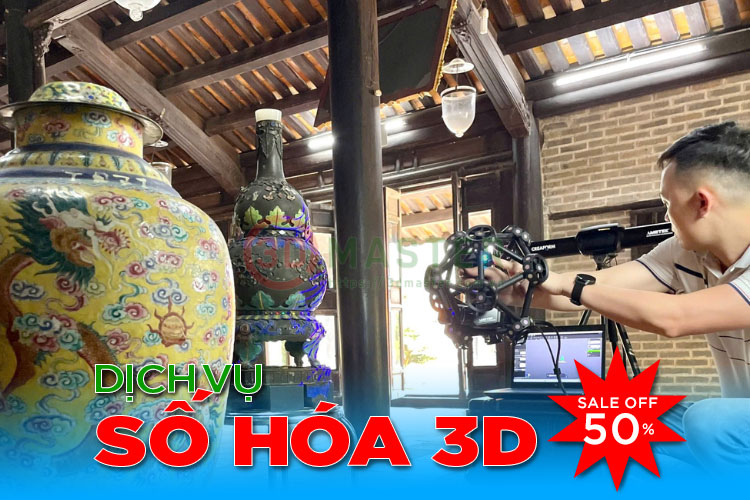
In this project, 3D laser scanning technology played an important role in capturing actual geometric data and supporting the design and manufacturing of replacement components.
Beyond helping restore an iconic maritime vessel, 3D technology also demonstrates significant potential for inspection, repair, reverse engineering, and vessel modification.
When real-world physical data is digitized into a highly accurate 3D model, engineers can make decisions faster, reduce manufacturing errors, and improve the efficiency of the entire restoration process.
In the future, 3D scanning technology will continue to become an important tool in the digitalization of the maritime industry, from hull design and quality inspection to maintenance, repair, and the manufacturing of replacement components.
3D Master Contact Information: