3D scanning in museums is replacing traditional photography thanks to its ability to digitize artifacts with high accuracy and without contact. 3D scanning technology helps preserve, research, and display heritage effectively and sustainably over time.
For decades, photography was considered the common method for recording images of museum artifacts. However, as preservation requirements increase, 2D images alone are no longer sufficient for archiving, researching, and restoring heritage. This is why 3D scanning in museums has become an inevitable trend globally.
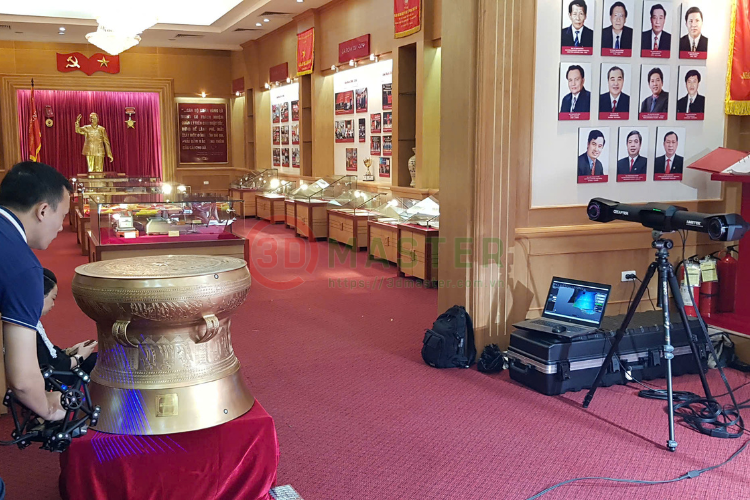
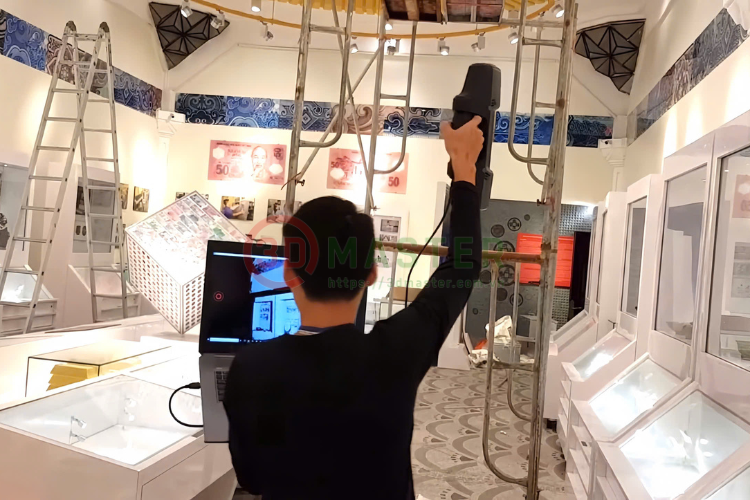
3D Master scans the Youth Museum in 3D using Creaform Metrascan
3D scanning allows for the creation of three-dimensional digitized models that are accurate down to the smallest detail of the artifact, from its overall shape to its patterns and surface textures. Museums can not only “see,” but also “touch” heritage data in digital form without posing any risk to the original artifacts.
Museum 3D scanning is the process of using 3D scanning technology to collect geometric and surface data of artifacts, then recreating them into complete digitized 3D models. These models can be stored long-term, serving scientific research, digital exhibitions, reconstructions, or 3D printing.
Unlike photography, which only records surface images from a specific angle, museum 3D scanning recreates the entire three-dimensional space of the artifact with high accuracy, ensuring that its scientific and historical value is preserved.
Traditional photography has inherent limitations. 2D images do not reflect the depth, volume, and form of artifacts. Crucial details such as curvature, thickness, surface texture, or spatial relationships between parts are almost impossible to measure accurately.
Meanwhile, modern museums not only store artifacts but also must meet the needs of in-depth research, heritage reconstruction, and interactive exhibitions. This requires data with absolute geometric accuracy, something that photography cannot provide.
3D museum scanning completely overcomes the limitations of photography. This technology allows for precise measurements of artifacts down to the micrometer without direct contact, ensuring absolute safety for rare heritage items.
3D scan data can be used for scientific analysis, checking wear and tear over time, or reconstructing damaged artifacts. Furthermore, 3D models can be integrated into digital museums, online exhibitions, or educational platforms, helping heritage reach a wider audience.
Digitizing museum artifacts is not just about storing images, but about building an accurate “digital replica” of the heritage. 3D scanning plays a central role in this process thanks to its ability to collect geometric and surface data at high resolution.
Through 3D scanning, museums can create a digital data repository that serves long-term research, conservation, and exhibition purposes. Even if the original artifacts are damaged by time or natural disasters, 3D scan data still ensures accurate reconstruction.
In archaeological research and conservation, accuracy is crucial. 3D museum scanning provides detailed geometric data, allowing researchers to measure, analyze, and compare artifacts without direct contact.
When artifact reconstruction is needed, 3D scanned models become the basis for reverse engineering and accurate reconstruction of every detail. This is especially important for unique artifacts, where even small discrepancies affect their historical value.
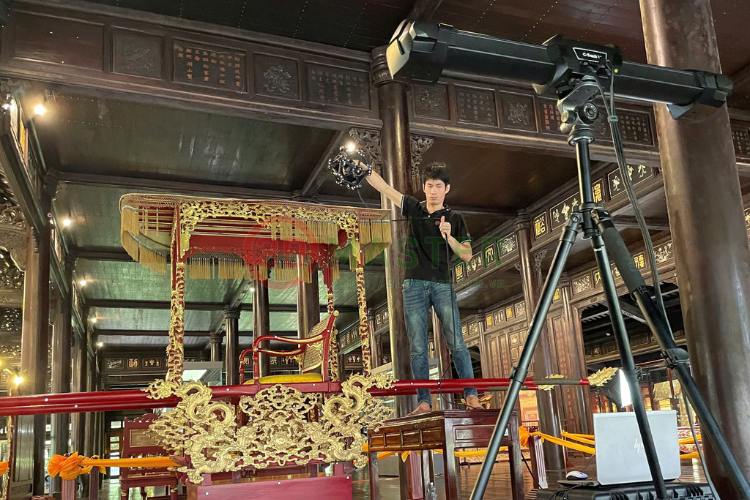
3D Master scans the Hue Museum using Creaform Metrascan
3D scanning opens up a completely new approach to museum exhibitions. 3D models can be displayed on interactive screens, websites, or virtual reality platforms, allowing visitors to observe artifacts from every angle.
In education, 3D scanning data helps students and pupils access heritage in a more visual and engaging way. This is a major step forward in spreading cultural and historical values to the community.
3D Master is a professional museum 3D scanning service provider, meeting stringent requirements for accuracy, artifact safety, and conservation data standards. With a system of high-precision 3D scanning equipment and a team of experienced engineers, 3D Master has digitized many types of artifacts of historical and cultural value.
In particular, 3D MASTER is a reputable distributor of genuine Creaform 3D scanning solutions in Vietnam with over 10 years of experience, ensuring that the quality of scanned data meets international standards right from the equipment stage, a key factor in museum and heritage digitization projects.
3D Master's 3D scanning process is specifically designed for museum environments, ensuring non-contact, no physical impact, and preserving the original state of artifacts throughout the digitization process.
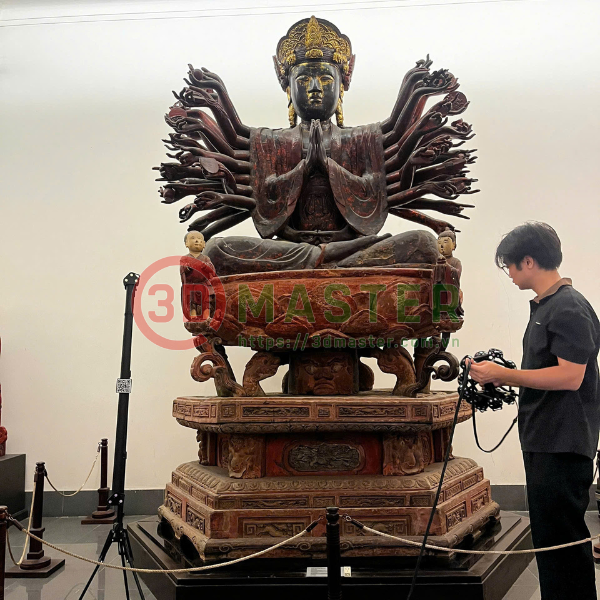
3D Master scans museums in 3D using Creaform Metrascan
3D Master not only provides 3D scanning services but also supports reverse engineering, data processing, and 3D model standardization according to research, exhibition, or 3D printing requirements. The scanned data can be used flexibly for various purposes, from long-term storage to digital exhibitions.
Our practical experience in 3D scanning artifacts allows 3D Master to understand the specific requirements of museums, from data security to scientific accuracy.
3D scanning in museums is opening up a completely new approach to the preservation and exploitation of heritage, far exceeding the limitations of traditional 2D images which only reflect the surface of artifacts. This technology helps preserve artifacts comprehensively, accurately, and sustainably over time.
In the context of strong digital transformation, the application of 3D scanning in museums is no longer a trend but has become a standard. Choosing the right implementation unit will determine the quality of data and the long-term value of heritage.
If you are looking for 3D scanning solutions for museums, artifact digitization, or reverse engineering for research and exhibition purposes, please contact 3D Master directly for in-depth consultation tailored to your specific project.
->>> See more: Professional and highly accurate 3D scanning services at 3D Master
Hotline - Zalo - LINE - Telegram - WhatsApp - Viber - Kakaotalk: +84 982 089 198 | 0986333960
Email: cuong3dmaster@gmail.com | hung3dmaster@gmail.com | tech3dmaster@gmail.com
Website: https://3dmaster.com.vn
