What is reverse engineering and why is this technology increasingly important in industrial manufacturing? This article explains the concept of reverse engineering, its implementation process, and its applications in mechanical engineering, automotive, and product development.
In the context of industrial manufacturing increasingly demanding high precision and rapid product development, reverse engineering has become a crucial technology helping businesses recreate, improve, and develop products from existing prototypes. However, many people still don't fully understand what reverse engineering is and why this method is widely applied in many engineering fields.
Reverse engineering not only helps recreate the geometry of a product but also supports structural analysis, design improvement, and optimization of the manufacturing process. Thanks to the development of 3D scanning technology and modern CAD software, reverse engineering is becoming a powerful tool in the mechanical, automotive, aerospace, and many other industrial sectors.
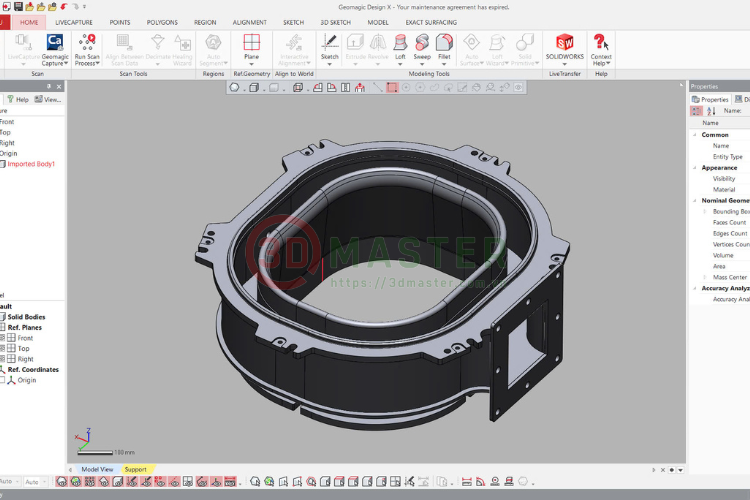
Reverse engineering is the process of analyzing and recreating the engineering model of a product from an existing physical object. Instead of starting from a technical drawing to create the product, reverse engineering works in the opposite direction: from the actual product to rebuild the drawing or CAD model.
In this process, the product is measured or scanned using 3D scanning technology to collect geometric data. The data obtained is then processed on design software to create an accurate digital model for analysis, modification, or remanufacturing.
Thanks to this method, businesses can recreate complex parts without needing original drawings, and can improve designs based on real-world data.
In many cases, businesses need to recreate components or equipment but no longer have the original engineering drawings. This often happens with older machinery, imported components, or discontinued products.
Reverse engineering solves this problem by digitizing the product's geometry and converting it into a CAD model. This allows engineers to analyze the structure, adjust the design, or remanufacture the part with precision.
In addition, reverse engineering shortens the time it takes to develop new products. Instead of starting the design from scratch, businesses can build upon existing models for faster improvements and optimization.
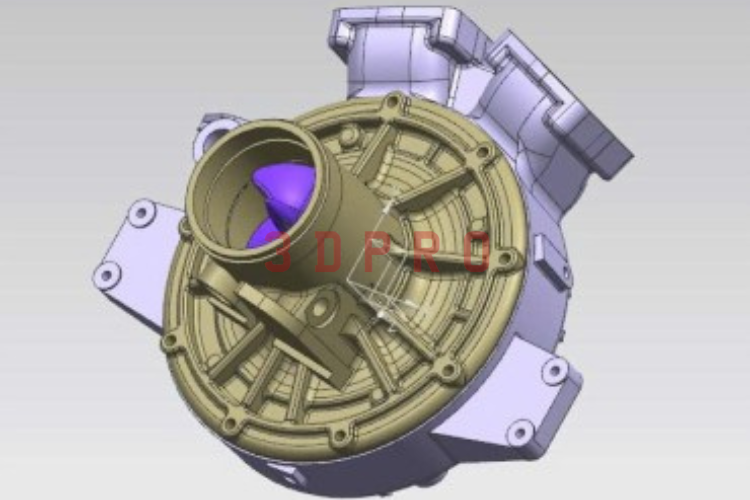
The reverse engineering process typically begins with collecting geometric data of the product. Today, 3D scanning technology is widely used to scan surfaces and create highly accurate point cloud or mesh models
After the scan data is collected, the next step is to process and clean the data to remove noise, gaps, or inaccuracies. This data is then transferred to CAD software to reconstruct the surface model or the engineering solid model.
Once the CAD model is complete, engineers can use it for various purposes such as engineering analysis, design modifications, simulation, or manufacturing.
This process allows for the accurate reproduction of complex details that are difficult to achieve with manual measurement methods.
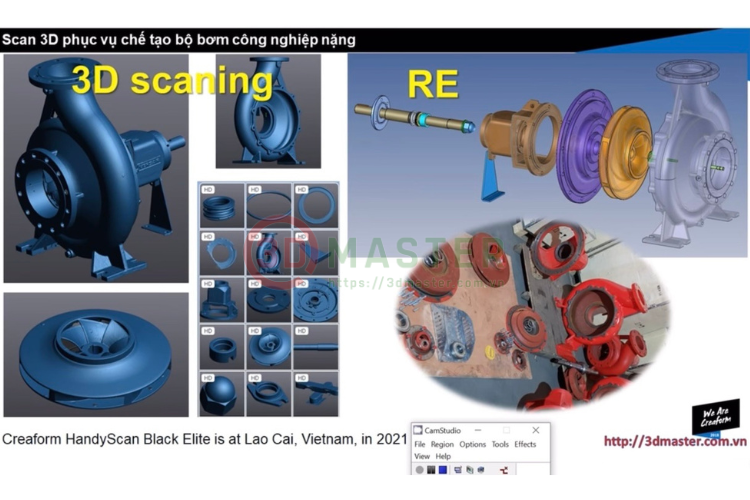
Reverse engineering is widely applied in many manufacturing and engineering fields.
In the mechanical engineering industry, reverse engineering helps to recreate old or damaged machine components when the original drawings are no longer available. This solution helps businesses reduce the cost of investing in new equipment while ensuring that the production process remains stable.
In the automotive and motorcycle industries, reverse engineering is used to develop accessories, body kits, or custom parts. Garages and manufacturers can 3D scan real vehicles to create precisely engineered aftermarket products.
In mold making, reverse engineering helps recreate complex parts for CNC machining or mold making.
Additionally, reverse engineering is applied in product quality control. By comparing CAD models with actual scanned data, engineers can detect deviations and control accuracy during production.
The application of reverse engineering offers many benefits to businesses in the product development process.
First, this method saves design time because businesses can rely on real-world samples instead of building models from scratch. This is especially useful when reproducing old components or equipment.
Secondly, reverse engineering enhances the accuracy of engineering models. When combined with 3D scanning technology, geometric data is collected with minimal error, ensuring that the designed product matches reality.
Furthermore, reverse engineering supports the product improvement process. Engineers can analyze the current structure and find more optimal solutions in terms of materials, geometry, or manufacturability.
Thanks to these benefits, reverse engineering is becoming an important part of the modern product development process.
The development of 3D scanning devices and CAD software has made reverse engineering much more accurate and efficient than before.
Industrial 3D scanners can collect millions of data points on the product surface in a short time. This data is processed by specialized software to recreate highly detailed 3D models.
Modern reverse engineering software allows for the reconstruction of technical surfaces, model editing, and data export to various CAD formats for production. The combination of 3D scanning, reverse engineering software, and CNC machining technology has created a complete digital process for the manufacturing industry.
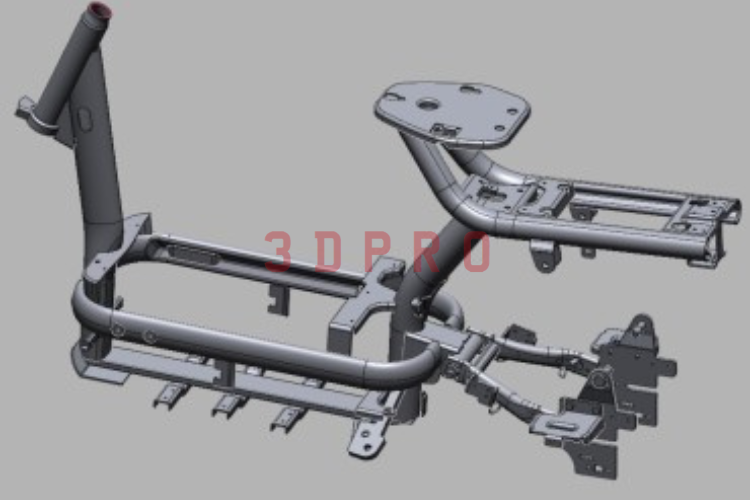
Reverse engineering is an important engineering method that helps recreate and analyze products from existing physical objects. By combining 3D scanning technology and CAD software, businesses can rebuild accurate engineering models, serving to improve design and production.
In the context of an industry increasingly demanding fast product development speeds and high accuracy, reverse engineering is becoming an indispensable tool in many engineering fields.
3D Master provides professional 3D scanning and reverse engineering solutions for many industries such as mechanical engineering, automotive, mold making, and product development. With its state-of-the-art Faro Creaform 3D scanning equipment and experienced engineering team, 3DMaster helps businesses digitize products, recreate CAD models, and optimize production processes.
Contact 3DMaster for detailed advice on reverse engineering solutions tailored to your business needs.
See more: High-precision 3D scanning and reverse engineering services at 3DMaster.
Hotline - Zalo - LINE - Telegram - WhatsApp - Viber - Kakaotalk: +84 982 089 198 | 0986333960
Email: cuong3dmaster@gmail.com | hung3dmaster@gmail.com | tech3dmaster@gmail.com
Website: https://3dmaster.com.vn
