3D scanning technology enables the redesign of aftermarket exhaust manifolds with high precision, optimizing airflow and shortening product development time. Scan-to-CAD solutions offer faster design processes, reduced trial-and-error, and improved engine performance.
In professional racing environments, performance differences sometimes lie in very small details. When competition regulations limit modifications to the internal engine structure, engineers are forced to optimize external components to unlock the full potential of the engine.
A PRO 2 racer noticed that the current exhaust manifold might be reducing engine performance. However, instead of relying on experience or time-consuming manual testing, the engineering team chose a data-driven approach using precise engineering data and 3D scanning technology. The project was undertaken by EP9 Autosport, a company specializing in restoring and upgrading high-performance vehicles in Canada.
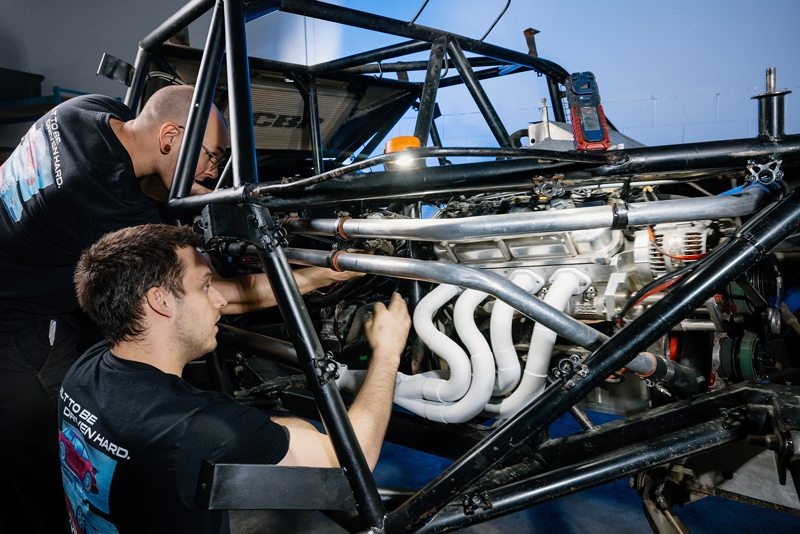
The original manifold was primarily designed to fit the chassis space without optimal airflow calculations. Important factors such as duct length, diameter, and overall geometry were not fully analyzed technically.
The engine manufacturer only provided some basic specifications, forcing the engineering team to rebuild the entire design from scratch. The goal was to create a new manifold that met technical specifications while perfectly fitting the limited installation space in the engine compartment.
After removing the old manifold, the first step was to 3D scan the engine head to accurately record the entire geometry of the installation area. This digitization helped engineers understand the contact points between the square exhaust port and the round duct.
Scanned data creates a highly accurate digital replica, serving as the foundation for the entire subsequent design process. This allows all engineering decisions to be based on real data rather than estimates.
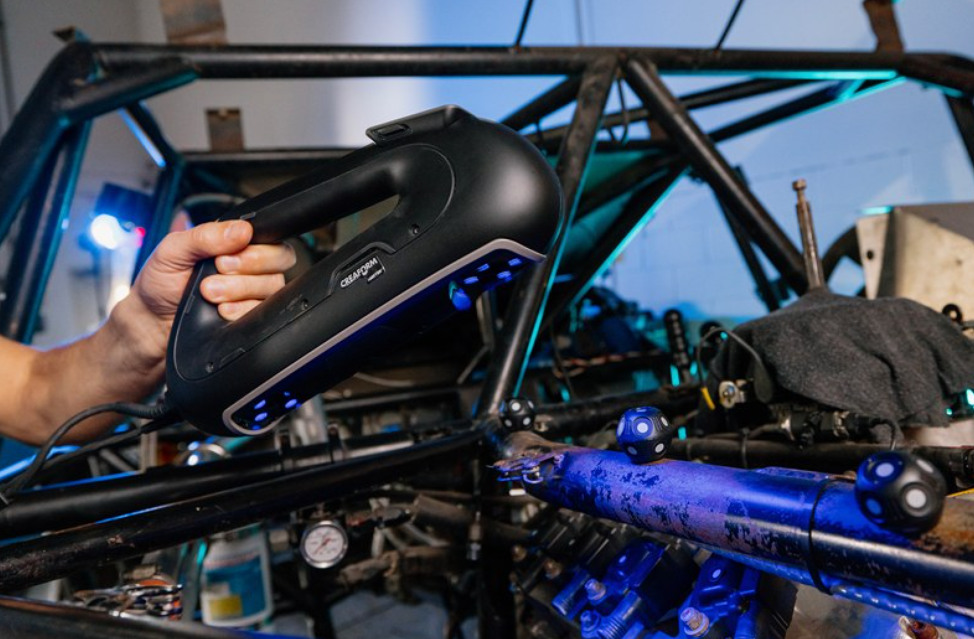
The engineering team used a modular plastic kit to create prototypes of the ductwork paths. This method allows for visualizing airflow and quickly determining the optimal configuration. Each segment in the kit represents a defined unit of length, making it easy and accurate to measure the total pipe length before moving on to digital design.
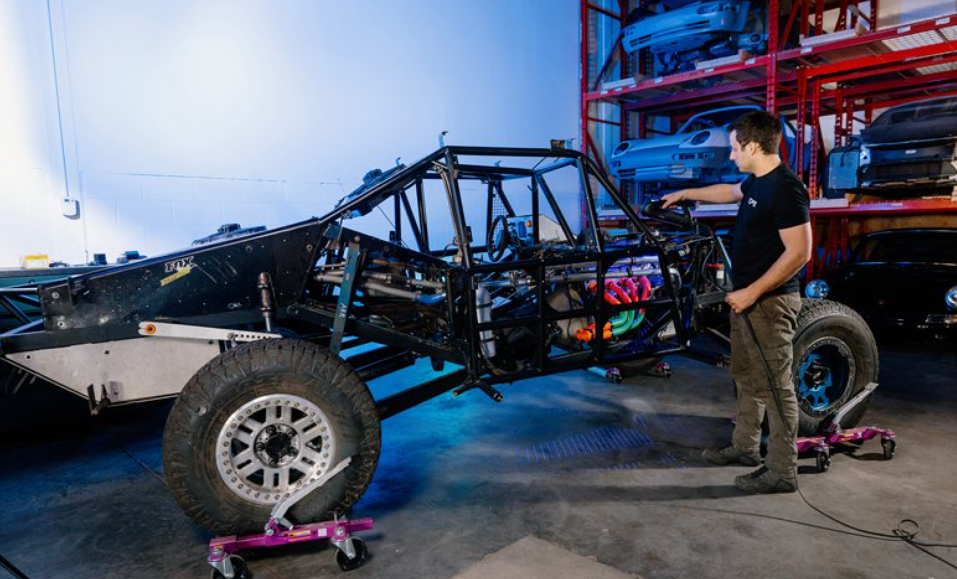
After completing the physical prototype, a handheld 3D scanning system was used to digitize the entire model. The resulting mesh data was processed directly in Scan to CAD software to build a complete parametric CAD model.
This process allows engineers to design directly on scanned data, significantly reducing manual modeling time and minimizing geometric errors. The end result is a CAD model ready for high-precision manufacturing.
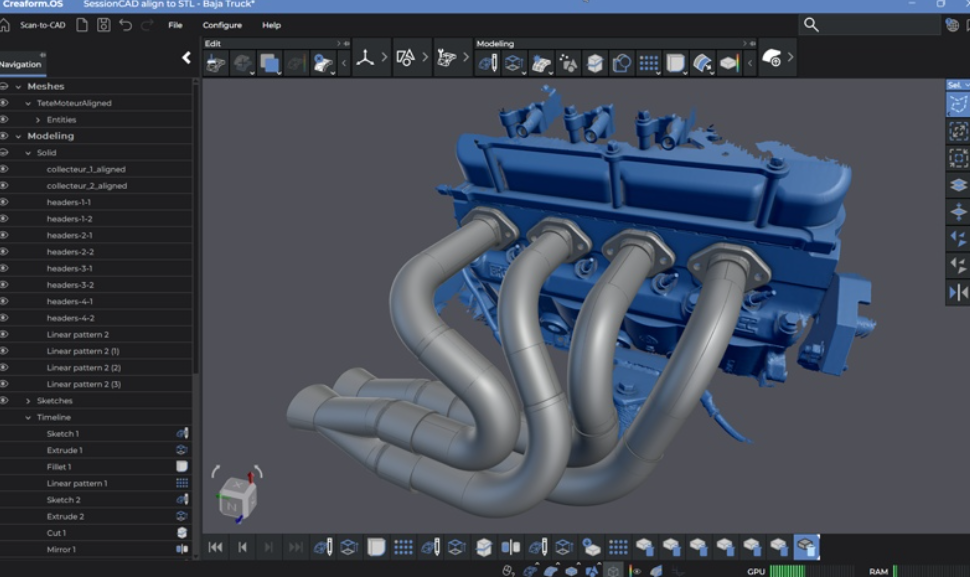
After the design is complete, the CAD data is transferred to mechanical machining to create the new commutator. Thanks to the accurate geometric data from the 3D scan, the finished product achieves near-perfect fit on the first production run. This eliminates the multiple testing cycles that often occur with manual measurements.
Previously, the component development process often took months. After design, parts had to be sent for machining before being checked for fit, leading to many costly revision rounds. When combining 3D scanning with 3D printing, engineering teams can transition from scanned data to prototype testing in just one day. This significantly shortens the product development cycle.
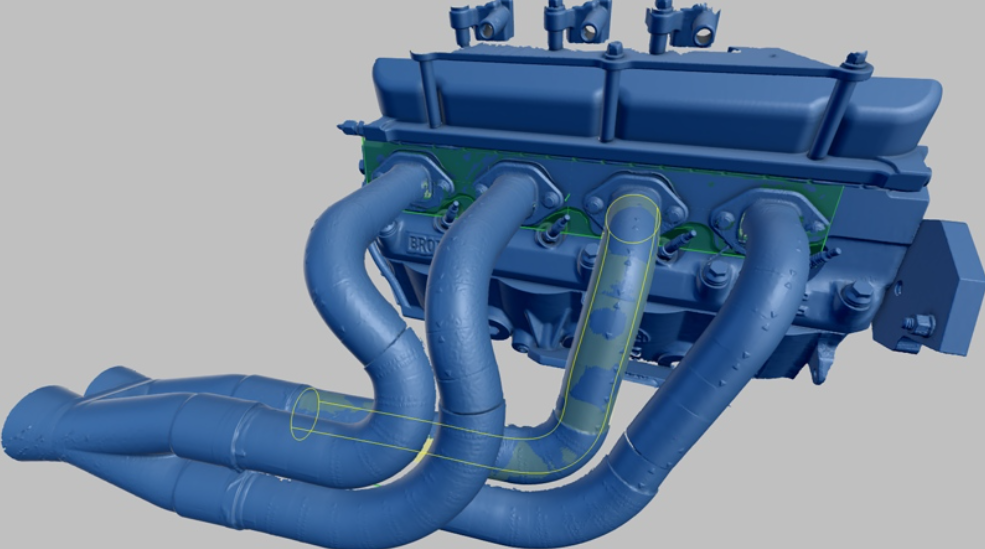
In the high-performance automotive industry, assembly tolerances are very small and installation space is often limited. 3D scanning provides reliable reference data, enabling engineers to design with high accuracy from the outset. Understanding the actual installation environment ensures new components function as intended without requiring post-machining modifications.
Thanks to the application of 3D scanning technology, the new commutator achieves a more optimal geometry, significantly improving engine performance and making a noticeable difference during on-track operation.
Thanks to the application of 3D scanning technology, the new commutator achieves a more optimal geometry, significantly improving engine performance and making a difference immediately on the racetrack.
The new design process helps EP9 Autosport execute complex custom projects faster, more efficiently, and more competitively in the market. At the same time, digitizing each project helps build a technical data library for long-term research.
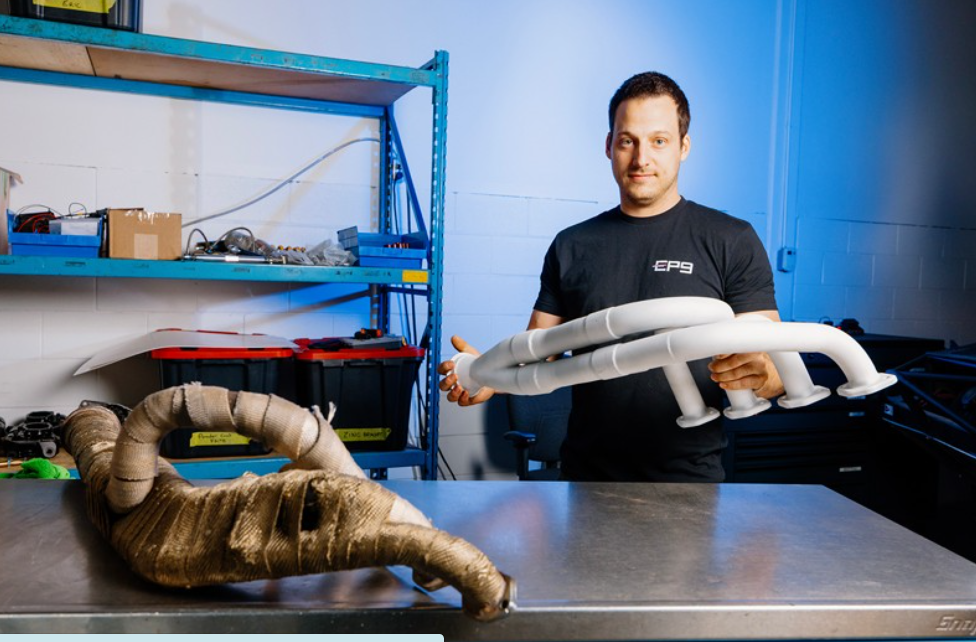
The combination of 3D scanning, Scan to CAD software, and 3D printing technology is redefining how products are developed in the automotive engineering industry. Projects that once required significant resources can now be completed quickly, even by small-scale engineering workshops.
This technology not only saves time and costs but also significantly improves accuracy, efficiency, and innovation in design.
The aftermarket stock redesign project demonstrates that 3D scanning is not just a measurement tool but has become a core foundation of modern product development processes. From collecting real-world data and building CAD models to manufacturing and verification, the entire process is optimized through 3D digitization.
In the context of the mechanical and automotive industries, which increasingly demand high precision and rapid development, 3D scanning is the solution that helps businesses shorten design cycles, reduce risks, and create a sustainable competitive advantage.
See also: High-quality 3D scanning services at good prices at 3D Master
Hotline - Zalo - LINE - Telegram - WhatsApp - Viber - Kakaotalk: +84 982 089 198 | 0986333960
Email: cuong3dmaster@gmail.com | hung3dmaster@gmail.com | tech3dmaster@gmail.com
Website: https://3dmaster.com.vn
