Whether 3D scanned data can be used immediately is a common question in manufacturing and reverse engineering. This article analyzes the practical process of 3D scanning data, its usability, and the factors affecting technical accuracy.
3D scanning technology is becoming the new standard in measurement, reverse engineering, and product development. However, one of the most frequently searched questions today is: can 3D scanned data be used immediately?
Many businesses expect that once scanned, the data can be used in design or production immediately. In reality, 3D scanned data needs to be properly understood and undergo appropriate processing before being applied in a technical environment.
This article provides a detailed analysis of the actual 3D scan data processing process, helping you understand when the data can be used immediately and when post-processing is required.
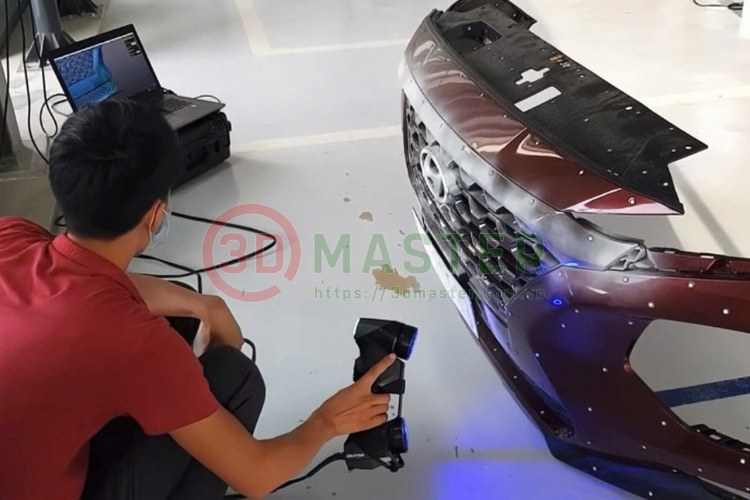
3D scanning is the process of collecting the surface geometry of an object using a specialized scanner to create a digital model in three-dimensional space. After the 3D scan is complete, the system will output the data in the form of a point cloud or 3D mesh.
At this stage, the 3D scan data only shows the surface shape with a very high point density. It is not yet a CAD technical drawing, so it cannot be modified or directly used in precision mechanical manufacturing.
Understanding the nature of the data from the beginning helps businesses avoid misunderstandings about its usability after scanning.
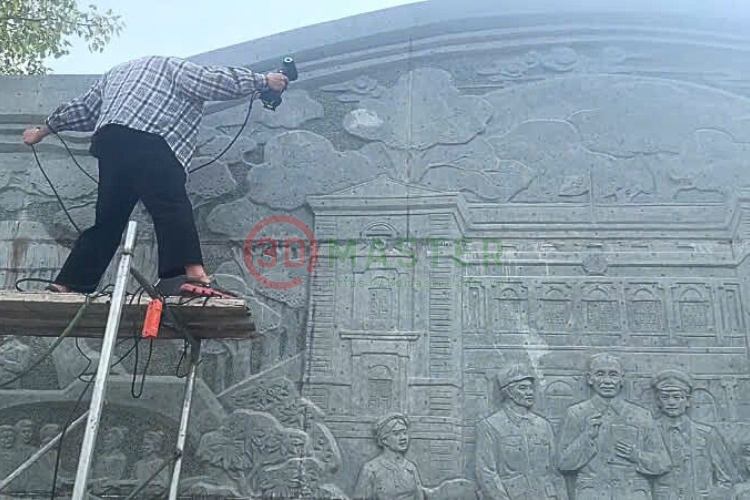
The answer is yes in some simple cases, but the majority of industrial applications require processing 3D scan data before use.
If the goal is 3D visualization or digital storage, 3D scan data can be used almost immediately. However, if serving reverse engineering, CNC machining, or technical tolerance inspection, the data needs to be processed in depth.
This stems from the difference between raw geometric data and parametric engineering models.
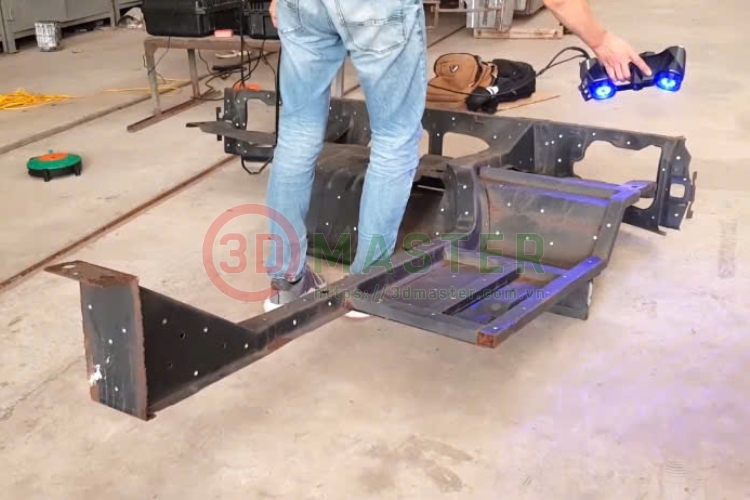
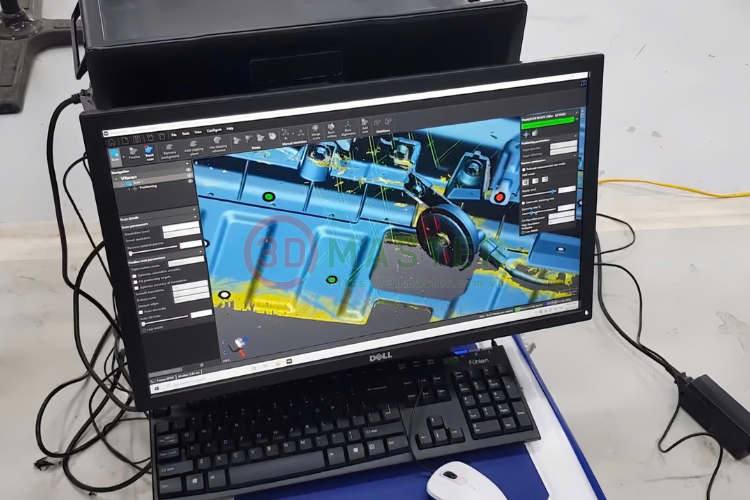
In some applications, 3D scan data can be used without converting it to CAD.
For heritage digitization or digital displays, 3D scan mesh files can be used directly for 3D projections or virtual reality.
In rapid inspection, inspection software allows direct comparison of 3D scan data with the design model to assess shape deviations.
For 3D printing of reference models, the data only needs basic mesh optimization before printing.
For 3D scan data to be practically applicable, the processing process usually involves several consecutive technical steps.
First, the 3D scan data is cleaned by removing noise and redundant areas. Then, the scans are aligned and combined into a unified model.
Next is the mesh optimization process to patch gaps and normalize the surface. When the project requires reverse engineering, engineers will rebuild the CAD model based on the 3D scan data.
This is the most important step because it transforms geometric data into editable and manufacturable engineering data.
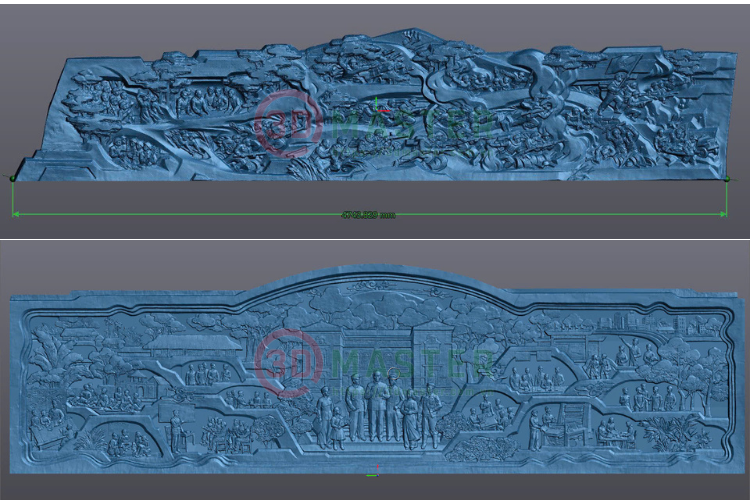
In reverse engineering, 3D scanning helps quickly recreate the shape of a part without the original drawing. However, 3D scan data must be converted into a parametric model to ensure editability.
In CNC machining, processed 3D scan data allows for accurate geometric reconstruction, reducing manual measurement time and minimizing errors.
In quality control, 3D scan data is used to compare discrepancies between the actual product and the CAD design with high accuracy.
The usability of 3D scan data depends on many technical factors.
The accuracy of the scanner determines the density and reliability of the data. Industrial equipment significantly reduces post-processing time.
The experience of the 3D scanner operator also directly affects the quality of the resulting model.
In addition, the ultimate intended use of the 3D scan data is the most important factor in determining the level of processing required.
3D scanning is not the final step but the foundation of the product digitization process. This technology helps collect data quickly and accurately, opening up the possibility of reconstructing complex shapes that are difficult to achieve with traditional measurement methods.
When combined with data processing and reverse engineering, 3D scanning helps businesses shorten product development cycles and improve quality control.
Sometimes, 3D scan data can be used immediately in display or quick inspection applications. However, in most engineering and manufacturing cases, 3D scan data needs to undergo processing to be converted into a complete engineering model.
Understanding the correct 3D scan data processing process helps businesses optimize investment efficiency and maximize the value of modern digital technology.
If you need 3D scanning, 3D scan data processing, or conversion of scan data to CAD models for reverse engineering and manufacturing, please contact our team of expert engineers for advice on suitable solutions, ensuring accuracy and effective implementation for each real-world project.
See also: High-quality 3D scanning services at good prices at 3D Master
Hotline - Zalo - LINE - Telegram - WhatsApp - Viber - Kakaotalk: +84 982 089 198 | 0986333960
Email: cuong3dmaster@gmail.com | hung3dmaster@gmail.com | tech3dmaster@gmail.com
Website: https://3dmaster.com.vn
