The railway industry is undergoing a significant transformation thanks to the development of digital measurement technology. In this context, 3D scanning has become a vital tool, helping manufacturers and operators obtain accurate geometric data of vehicles, mechanisms, and auxiliary systems.
Trains and rolling stock often have complex structures, large dimensions, and operate in harsh environments. Accurate measurement of these components plays a crucial role in the design, manufacturing, and maintenance processes.
3D scanning allows for the collection of data on the entire surface of a part in the form of a point cloud or mesh model. From this data, engineers can perform geometric analysis, check for deviations from the CAD model, and make more accurate engineering decisions.
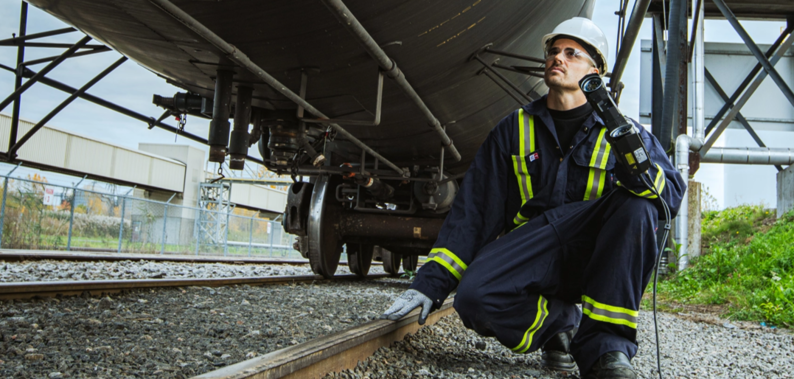
During the design phase, collecting accurate geometric data of existing parts and structures helps engineers build more accurate CAD models. 3D scanning technology allows for the digitization of real-world parts for reverse engineering or upgrade design.
Thanks to scan data, designers can quickly build digital models of train car frames, chassis systems, or complex assemblies. This shortens product development time and reduces errors in the design process.
Furthermore, 3D data is also used in simulation software to test load-bearing capacity, optimize structures, and assess the durability of components before production.
During the production phase, quality control is a key factor in ensuring the safe operation of railway vehicles.
3D scanning allows for the inspection of the dimensions and geometry of manufactured parts against the initial design model. The data obtained can be directly compared with the CAD model to identify geometric deviations.
Thanks to its ability to quickly measure complex surfaces, 3D scanning technology significantly reduces inspection time compared to traditional measurement methods. This helps manufacturers quickly detect production errors and adjust processes in a timely manner.
Modern handheld laser scanning systems can collect millions of measurement points per second and create automated mesh models, making the inspection process faster and more efficient.
Modern trains incorporate numerous complex mechanical, electrical, and structural systems. During assembly, ensuring the accuracy of components is crucial.
3D scanning allows for the inspection of the position and geometry of parts before final assembly. Measurement data helps identify discrepancies between components and supports timely adjustments.
Furthermore, this technology also supports virtual assembly. Engineers can combine scan data with CAD models to verify compatibility before actual deployment.
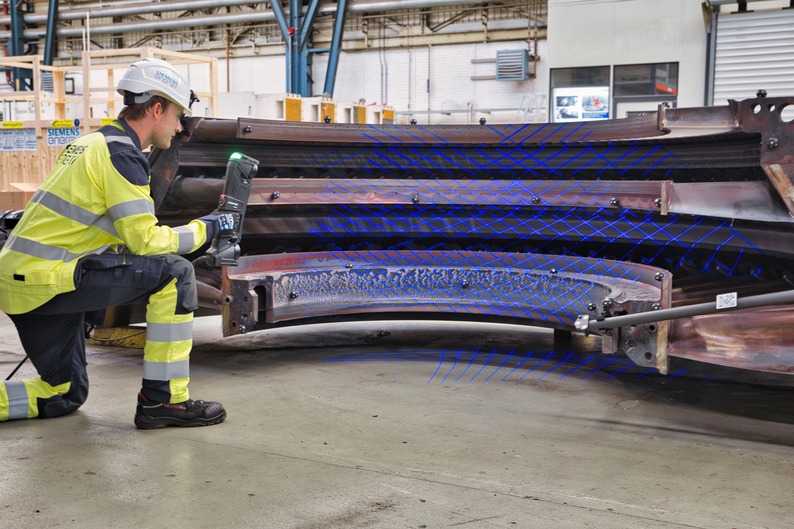
After the vehicle enters service, regular maintenance is essential to ensure safety and extend equipment lifespan.
3D scanning enables engineers to quickly inspect the condition of components such as the chassis, wheels, suspension systems, or load-bearing structures of the train cars.
By comparing scan data with the original design model or previous measurement data, engineers can determine the extent of wear, deformation, or damage to a component.
Early detection of these problems helps operating units plan maintenance more effectively and reduces the risk of breakdowns during operation.
One of the key benefits of 3D scanning is its ability to support upgrades to existing vehicles.
For many trains that have been in operation for many years, the original design drawings may no longer be complete or accurately reflect the current condition of the vehicle. In this case, 3D scanning allows for the digitization of the entire structure to create an accurate digital model.
From this model, engineers can design replacement parts or upgrade the system without disassembling the entire structure.
As a result, the process of renovating or modernizing vehicles becomes faster and more efficient.
3D scanning is becoming a crucial technology in the railway industry due to its ability to collect accurate geometric data of large and complex structures. This technology effectively supports all stages of the vehicle lifecycle, from design, manufacturing, quality control to maintenance and upgrades.
The application of 3D scanning not only improves the accuracy of engineering processes but also helps businesses reduce project implementation time and optimize operating costs in the long term.
Hotline - Zalo - LINE - Telegram - WhatsApp - Viber - Kakaotalk: +84 982 089 198 | 0986333960
Email: cuong3dmaster@gmail.com | hung3dmaster@gmail.com | tech3dmaster@gmail.com
Website: https://3dmaster.com.vn
